The 10-Year Anniversary Re-Watch: Did It Actually Hold Up?
Nostalgia is the ultimate cultural gaslighting tool. It acts as a soft-focus filter in the mind, smoothing over structural plot holes, blurring away lazy characterization, and wrapping our past viewing experiences in a warm, unearned glow of emotional comfort. We remember how a television show made us feel during a specific summer or a precise winter break a decade or two ago, and we instantly mistake that personal, warm sentimentality for enduring artistic excellence.
But what happens when you strip away the warm amber tint of memory? What happens when you take a universally adored, monocultural juggernaut and subject it to a cold, clinical, modern analytical eye?
This week, I did exactly that. I locked myself in my screening room, loaded up a series that was not just a hit, but a global religion—a show that defined an entire generation’s understanding of urban adulthood. I didn’t watch it to reminisce about my own youth. I watched it to see if its pacing, its dialogue mechanics, and its core social themes survive the rapid, unforgiving evolution of our cultural context.
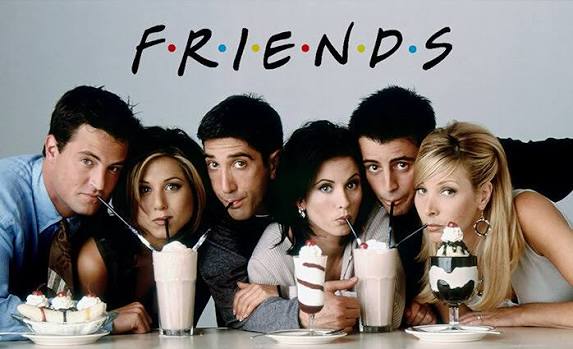
I sat down and re-watched Friends. Yes, Friends. The absolute holy grail of comfort television. The multi-billion-dollar syndication monster that ran from 1994 to 2004, dominated the streaming wars of the 2010s, and celebrated its massive milestone anniversaries under a permanent wave of public adulation.
I didn’t just watch a couple of clip shows or the famous Thanksgiving episodes. I subjected myself to the full, overwhelming weight of its structural layout. And sitting in front of it now, stripped of the ambient noise of 90s optimism, the experience was profoundly jarring. The show hasn’t changed a single frame, but the world around it has shifted completely. Let’s talk about the brutal, illuminating reality of the modern retrospective.
Part I: The Trap of the Temporal Time Capsule
There is an immense, vital difference between a television show that is about an era and a television show that is completely trapped by it.
When we look back at the golden ages of television, the truly immortal pieces of art operate as brilliant historical windows. They are deeply rooted in their specific structural environments, yet their baseline observations about human greed, insecurity, and the search for connection remain completely unshakable. They hold up because their writers were digging for fundamental human truths, not chasing the immediate, frantic rhythms of contemporary comfort. Friends, however, fell directly into the latter trap.

Immortal Art: Digs Downward ──► Captures Unvarnished Human Universals ──► Survives Context Shifts
Product Art: Spreads Outward ──► Hooks into Fleeting Cultural Comforts ──► Decays when the World Moves On
In the mid-1990s and early 2000s, Friends seemed to represent the ultimate model for contemporary living. The rapid, wry banter was referenced at watercoolers the following morning. Its hairdos were emulated by countless individuals, its theme tune turned into a worldwide anthem, and its economic perspective aligned seamlessly with the prevalent, pre-9/11 era of American wealth.
Today, sitting in front of it feels like discovering a meticulously kept corporate time capsule hidden by a network marketing team.
The show’s physical setting—those enormous, unrealistically affordable Greenwich Village apartments adorned in rich, vivid purples and furnished with eclectic vintage pieces—seems less like a genuine backdrop and more like a psychological dreamscape.
The characters do not engage with the true realities of late-20th-century New York; they reside in an immaculate, effortless playground entirely devoid of economic worries, racial variety, and authentic systemic strain. In this world, a beginner chef and a part-time personal shopper can afford a lavish two-bedroom apartment in Manhattan while spending about six hours daily on the couch with coffee.
This complete disconnection from reality was not a mistake; it was the main attraction of the show. It was created to serve as the perfect getaway from the chaotic, complex reality beyond the studio boundaries. However, examining it through a contemporary analytical perspective reveals that this frictionless setting generates a significant narrative void.
Since the stakes are never genuinely connected to reality, the dramatic structure must depend solely on fabricated miscommunications, repetitive romantic cycles, and characters whose development is eternally hindered to maintain the sitcom format’s status quo.
Part II: The Creative Ruin of the Multi-Cam Laugh Track
To genuinely grasp why Friends has difficulty resonating in today’s context, we need to move beyond our nostalgic recollections of the characters and analyze the actual physical structure of the show: the multi-camera sitcom from the 1990s filmed in front of a live studio audience.
For many years, this was the unquestionable ruler of network comedy. It was a factory production line created to optimize laughter per minute. However, viewing it now shows a format that seems exceedingly basic, limiting, and creatively stifling when contrasted with the single-camera expertise of modern comedy.
The first aspect that strikes you like a tangible impact when you re-watch Friends now is the overwhelming, unyielding dominance of the laugh track.
Since the performers are acting for a live crowd, each line of dialogue is timed with the anticipation of a mechanical burst of laughter. Observe the physical displays attentively. Observe how the performers must halt in mid-action, maintaining their expressions for three to five seconds following each punchline, waiting for the audience’s laughter to fade before they can present the next line.
Sitcom Dialogue Cadence:
[Character delivers line] ──► [Actor freezes & holds expression] ──► [3-5 seconds of laughter] ──► [Next line delivered]
This structural arrangement utterly obliterates any trace of natural human rhythm. The characters do not communicate with one another; they present deliberate, rhythmic setups and punchlines aimed at an unseen audience. The emotional moments are repeatedly disrupted by undeserved applause and artificial laughter.
When a character reveals true, heart-wrenching vulnerability—such as Monica suffering through her fertility challenges or Chandler facing his profound fear of commitment—the narrative tension is quickly undermined by a loud, jarring “awww” from the audience. The format harshly penalizes depth, compelling every intricate human feeling to be quickly settled by a shallow joke in under ninety seconds.
Moreover, the physical setup needed for the multi-camera arrangement transforms the iconic apartments into bland, synthetic theater stages. The camera is confined to an unseen path, consistently viewing from the same angle over an expansive layout. Characters are consistently coming through the front door, taking the same route to the kitchen island, or gathering around the central coffee table in awkward geometric arrangements to avoid obstructing the camera.
There is no visual subtext, no cinematic framing, and no atmospheric texture. It is a visual language completely lacking in shadow, depending on vibrant, flat, overhead lighting from television that removes any sense of real-world gravity or significance.
Part III: The Character Degradation (Frictionless Archetypes)
During the height of Friends, the general agreement was that these six characters embodied the best representation of our own social groups. We sorted ourselves and our friends into tidy, simple categories: “I’m a Chandler,” “She’s a Rachel,” “He’s a Joey.”
However, when you view the series in order from beginning to end, you don’t witness a collection of developing individuals. You witness a chilling decline in character depth—a literary occurrence called Flanderization, in which a character’s one dominant trait overtakes their whole personality, resulting in a distorted caricature of their former self.
The Heartbreaking Breakdown of Joey Tribbiani
In the initial seasons of the series, Joey was depicted with an authentic, relatable charm. He was an underutilized actor who was somewhat naive, certainly, but he had a keen emotional awareness, a deep loyalty to his buddies, and a noticeable savvy about the streets.
By Season 10, the writers had diminished his mental capabilities to a level that transcends humor and becomes a matter of medical concern. He transforms into a figure who genuinely cannot understand fundamental figures of speech, who has difficulty repeating basic expressions in a foreign tongue, and whose entire mental framework is diminished to the instinctual, primal urges of sustenance and reproduction.
The writing team understood that gradually making Joey increasingly ridiculous was a simple method to create quick punchlines without crafting genuine situational humor, and as a result, they utterly undermined the character’s human essence.
Monica Geller and the Aggression Trap
The evolution of Monica is equally disheartening to watch in a retrospective binge. What began as a compelling, highly organized, and fiercely independent woman navigating the competitive culinary world of New York gradually devolved into a shrill, hyper-aggressive caricature of obsessive-compulsive disorder. Her competitive nature ceases to be a quirky character trait and becomes a weaponized, deeply unpleasant behavior pattern that dominates every scene she occupies.
The show treats her severe, trauma-driven anxieties about cleanliness and control not as complex psychological layers to be explored, but as loud, repetitive setups for cheap physical comedy. The nuance is entirely stripped away to feed the insatiable appetite of the multi-cam beast.
Part IV: The Mechanics of the Toxic Romantic Loop
We cannot analyze Friends without addressing the absolute elephant in the room: the ten-year, agonizing narrative trajectory of Ross Geller and Rachel Green.
In the mid-90s, the “Will They/Won’t They” dynamic between Ross and Rachel was the primary narrative engine of network television. It drove ratings to historic heights and kept millions of viewers locked in a permanent state of parasocial anxiety.
But when you watch that relationship unfold without a week-long break between episodes, the romance completely curdles. It reveals itself to be one of the most toxic, emotionally manipulative, and structurally lazy romantic arcs ever committed to paper.
The Anatomy of Romantic Stagnation
- The Early Spark (Seasons 1-2): Real emotional stakes, genuine yearning, and authentic character obstacles.
- The Toxic Pivot (Season 3): Deep-seated insecurity, weaponized jealousy, and the invention of the “Break” loophole.
- The Algorithmic Stalls (Seasons 4-9): Accidental wedding names, secret Vegas marriages, and synthetic memory wipes designed entirely to delay the ending.
- The Unearned Climax (Season 10): A massive life-changing career opportunity in Paris abandoned for a man who spent a decade undermining her professional autonomy.
The core issue of the Ross and Rachel relationship is that their challenges rarely stem from genuine character development or incompatible beliefs. Rather, their breakups are solely caused by Algorithmic Stalls—fabricated plot devices introduced by the writers right when the characters are on the verge of achieving stability.
Ross’s character, seen through a contemporary analytical lens, is profoundly disturbing. His relationship with Rachel is rooted in deep possessiveness, significant professional envy, and a failure to see her as an independent person instead of a treasured possession he has desired since high school.
Consider the real mechanics of their historic disruption in Season 3. It arises solely from Ross’s struggle to cope with Rachel pursuing a challenging, flourishing career in the fashion realm that separates her from his close proximity. He storms into her office, claims his space with unrequested romantic advances, and has a complete meltdown because she has obligations beyond their relationship.
The series continually presents his harmful insecurity as “intense affection,” a thematic decision that has become increasingly outdated in a society that has dedicated the past ten years to cultivating a more nuanced understanding of emotional manipulation and domineering conduct.
And what is the final resolution of this ten-year narrative arc? Rachel receives a dream job opportunity in Paris—a significant, victorious conclusion of her journey from a pampered, reliant runaway to a strong corporate leader.
However, the show compels her to leave that plane, forsaking her career path to go back to a man who has spent a decade demonstrating he cannot cope with her achievements. Though presented as the peak of romantic expression, a contemporary perspective reveals it as a profoundly conservative, backward narrative decision that compromises a woman’s hard-earned autonomy for the sake of conventional sitcom resolution.
Part V: Social Themes and the Homogeneous Vacuum
Every work of art is a product of its time, and it is a lazy critical shortcut to judge a show from thirty years ago entirely by the social standards of 2026. However, when an anniversary re-watch is pushed aggressively by modern corporate distributors, we have a responsibility to evaluate how the show’s baseline cultural assumptions function today.
The most glaring element of Friends in a modern retrospective is its absolute, unwavering dedication to homophobia, transphobia, and fatphobia as foundational comedic pillars.
Sitcom Comedic Tropes (1994-2004):
├── The Panic Joke: Men accidentally hugging, touching, or showing emotional intimacy.
├── The Erasure: A massive metropolis completely scrubbed of its actual racial diversity.
└── The Visual Punchline: Putting an actor in a literal body suit for easy, unearned physical laughs.
The jokes about Chandler’s parent—a trans woman or drag queen performing in Las Vegas, whom the series consistently misgenders, ridicules, and regards with extreme physical revulsion—are really hard to endure today. It’s not merely that the language is outdated; it’s that the essence of the humor derives from the imagined shame of Chandler having an unconventional parent.
In the same vein, the entire relationship between Chandler and Joey is consistently hindered by a profound, frantic fear of being seen as gay. Whenever they exchange a heartfelt moment, show sincere physical closeness, or inadvertently partake in a typically feminine pursuit, the script abruptly reverts to a frantic, defensive remark aimed at assuring the 1990s viewers of their straightness.
And then, naturally, there’s “Fat Monica.” The show’s flashbacks to Monica’s adolescence depend solely on the image of an actor in a fat suit, functioning under the utterly lazy comedic belief that a bigger body is inherently a funny physical joke. Her complete character background is depicted as a frantic, harrowing flight from a physical identity that the writers handle with utter disdain.
When you take a moment to consider the larger context of the show, it becomes clear that these jokes aren’t standalone anomalies; they are the unavoidable outcome of the show’s extreme uniformity.
By placing the narrative in a fantastical representation of Greenwich Village—historically one of the most racially diverse, culturally vibrant, and LGBTQ+-friendly areas globally—and entirely erasing any non-white, non-heterosexual presence, the series established a creative Echo Chamber. Since the characters never engage with anyone beyond their specific demographic, their narrow biases remain unexamined. The world remains secure, clean, and wholly undemanding for its primary audience, but it renders the show appearing limited and exclusive in today’s context.
Part VI: Why the Comfort Machine Survives Anyway
Given these massive, structural failures—the artificiality of the multi-cam format, the Flanderization of the characters, the toxic romance loops, and the deeply dated social politics—we have to confront a fascinating, multi-million-dollar paradox: Why does Friends remain one of the most-watched television shows on earth?
To answer this, we have to look past the marquee and step directly into the cold, calculated environment of the streaming boardroom.
In our current hyper-accelerated cultural landscape, the human brain is under a state of permanent cognitive overload. We are bombarded by endless prestige dramas with complex timelines, hyper-violent dystopian thrillers, and a relentless 24-hour real-world news cycle that generates an immense amount of baseline anxiety. In this environment, Friends functions not as art, but as a clinical neurological sedative.
The Modern Streaming Protocol: Do not challenge the viewer. Do not force them to parse complex visual subtext or moral ambiguity. Deliver a predictable, low-stakes environment with bright lighting and recognizable faces that can run in the background while they scroll on their phones.
The very elements that make Friends fail as an enduring piece of dramatic art are the exact reasons it succeeds as a corporate comfort product.
Its absolute predictability is its greatest asset. The flat, bright lighting doesn’t require visual focus. The laugh track provides a reassuring social cue, telling your brain exactly when to feel amused without forcing you to do any actual intellectual heavy lifting. The lack of real-world stakes means you can jump into any episode, at any point in its ten-year run, and instantly know exactly where you stand.
It is a television show transformed into an industrial security blanket. It offers a nostalgic retreat to an idealized, fictional past where rent was cheap, friendship was unconditional, and the complexities of the modern world simply did not exist.
Part VII: Clear Away the Amber
I want to conclude this analysis by reiterating my final challenge to those who still regard Friends as an unquestionable masterpiece of the genre: Watch five consecutive episodes from Season 7 tonight with the lights fully on, and pay close attention to the silence amid the laughs.
Remove the recollections of who you enjoyed it with in your youth, erase the ease of having it run repeatedly while you tidy your place, and focus solely on the artistic elements displayed on the screen. Notice how the structure limits the performers. Observe how the script mistreats its characters to achieve a certain number of jokes. Examine the ethical realm it urges you to affirm.
You’ll soon understand that Friends was never an enduring work of human storytelling. It was an exceptionally well-presented, attractively designed, and perfectly promoted item from a distinct, thriving, and sheltered historical period.
And it is perfectly fine to still derive solace from it. At times, we all require a means to break away from reality. However, we need the necessary courage to recognize the distinction between an everlasting creation of human brilliance and a skillfully designed piece of corporate remembrance. Cease allowing your memory to distort your artistic preferences. Activate the display, remove the gentle amber hue, and view the piece for what it truly represents.