The Antonelli vs. Hamilton Data Check: Is Mercedes’ Teenage Gamble Actually Outperforming Ferrari’s Icon in 2026 F1?
The 2026 F1 season is currently functioning as a massive, live-action sports science experiment. When Toto Wolff let Lewis Hamilton walk to Ferrari and threw Andrea Kimi Antonelli straight into the most scrutinized seat in motorsport, the collective consensus from the screaming pundit class was clear.
It was called a reckless pivot. It was labeled an emotional overreaction to losing a seven-time World Champion. But we do not look at romanticized history. We look at the ledger.
We are currently nine races into the 2026 campaign, fresh off a chaotic British Grand Prix at Silverstone. The tracking data, the points matrix, and the qualifying gap charts are yielding an absolute shock to the system. The narrative-driven fans are hyper-focused on Lewis Hamilton’s podiums for Scuderia Ferrari, but if you extract the core raw metrics, a terrifying realization is beginning to dawn on Maranello.
Mercedes’ teenage gamble isn’t just surviving. Statistically, he is unbalancing the entire global grid.
The Raw Ledger: Standings and Points Volatility
Let’s drop the first spreadsheet directly onto the table. When analyzing whether a roster transition worked, the absolute bottom line is the driver standings matrix. This isn’t about who had the most impressive overtake on the highlight reel; it’s about net asset production over a multi-race sample size.
2026 F1 Drivers’ Standings (Post-Silverstone)
| Position | Driver | Team | Wins | Poles | Total Points |
| 1 | Andrea Kimi Antonelli | Mercedes | 5 | 5 | 179 |
| 2 | George Russell | Mercedes | 2 | 1 | 154 |
| 3 | Lewis Hamilton | Ferrari | 1 | 0 | 147 |
| 4 | Charles Leclerc | Ferrari | 1 | 1 | 108 |
Take a long, hard look at those numbers. Andrea Kimi Antonelli is currently leading the World Drivers’ Championship. At just 19 years old, operating in his second full season of grand prix racing, he has converted nine race weekends into five victories and five pole positions.
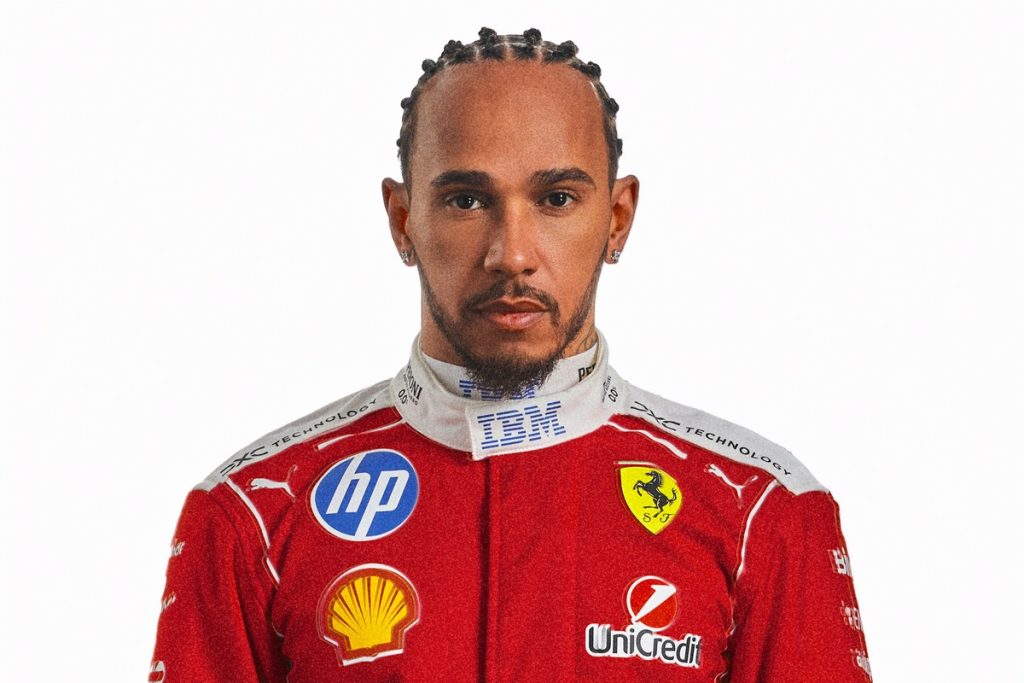
Meanwhile, Lewis Hamilton sits 32 points behind him in third place. Hamilton’s debut season with Ferrari has been highly efficient on paper: nine races entered, a consistent string of top-10 finishes, multiple podiums, and a brilliant emotional victory. It is exactly the kind of high-floor, reliable execution Ferrari paid over $100 million a year to secure.
But F1 is a game of marginal ceilings, not just safe floors. Antonelli’s season point-accumulation rate sits at an elite 19.88 points per weekend. Hamilton is registering at 16.33 points per weekend. Toto Wolff didn’t just replace Hamilton’s production; he actively unlocked a higher offensive ceiling for the Brackley engine room.

My Take on the Standings: If you told an F1 casual before the season that a kid born in 2006 would be clearing Lewis Hamilton and Max Verstappen in the standings by July, they’d have told you to delete your account.
But the numbers don’t lie. Hamilton is putting on a clinical presentation of veteran mitigation at Ferrari. Antonelli, however, is executing pure, unfiltered velocity. It is the definitive transition of a sport moving from an old paradigm to a new one.
Qualifying Delta: Single-Lap Velocity Tracking
To find the pure, unvarnished speed of a driver, you have to strip away tire degradation, race strategy, pitstop variance, and dirty air. You have to look exclusively at Saturday afternoon. Qualifying metrics provide the definitive baseline for a driver’s raw physiological limit.
When we isolate the single-lap qualifying deltas for 2026, the contrast becomes glaring.
- Andrea Kimi Antonelli: 5 Pole Positions | 1.8 Average Grid Slot | 6-3 vs. George Russell
- Lewis Hamilton: 0 Pole Positions | 4.0 Average Grid Slot | 4-5 vs. Charles Leclerc
Antonelli’s average starting position of 1.8 across nine races is completely absurd. He secured pole in China, Japan, Miami, Monaco, and most recently at Silverstone. He is routinely outqualifying George Russell, a driver universally recognized as one of the most lethal single-lap specialists on the planet.
Now look at the Ferrari garage. Hamilton is averaging a 4.0 on the starting grid. More importantly, he is losing the internal qualifying metric to Charles Leclerc. Hamilton hasn’t claimed a single pole position all year.
In modern Formula 1, track position is everything. Antonelli’s ability to consistently put his W17 on the front row lowers his strategic risk profile on Sunday. Hamilton, starting on rows two or three, is constantly forced to fight through aerodynamic wash, increasing his tire wear and leaving his race results highly dependent on structural safety cars or mechanical undercuts.
Saturday vs. Sunday Execution Analysis
A common critique of young prospects is that they are “Saturday drivers”—all speed, no management. Let’s look at the tape from the last few races to see if Antonelli is crumbling under race conditions or if his tactical execution matches his raw speed.
The Monaco Grand Prix: Total Spatial Dominance
Antonelli qualified on pole by a razor-thin margin over Max Verstappen. On Sunday, around the tightest, most unforgiving geography in sports, the teenager drove like a ten-year veteran. He managed a massive tire-saving delta in the first stint, completely dictating the pace of the race, and crossed the line for a flawless victory. Hamilton maximized his machinery to finish on the podium, but he spent 78 laps staring at the back of a Mercedes that looked completely untouchable.
The Austrian Grand Prix: Holding the Line Under Pressure
At the Red Bull Ring, Russell took the win after a chaotic weekend, but Antonelli quietly secured a crucial podium from fourth on the grid. He managed his hard-compound tire wear in the second stint to hold off a charging Lewis Hamilton. The tracking data showed Antonelli’s sector-three corner entry speeds were consistently faster than Hamilton’s, despite running a nearly identical downforce configuration.
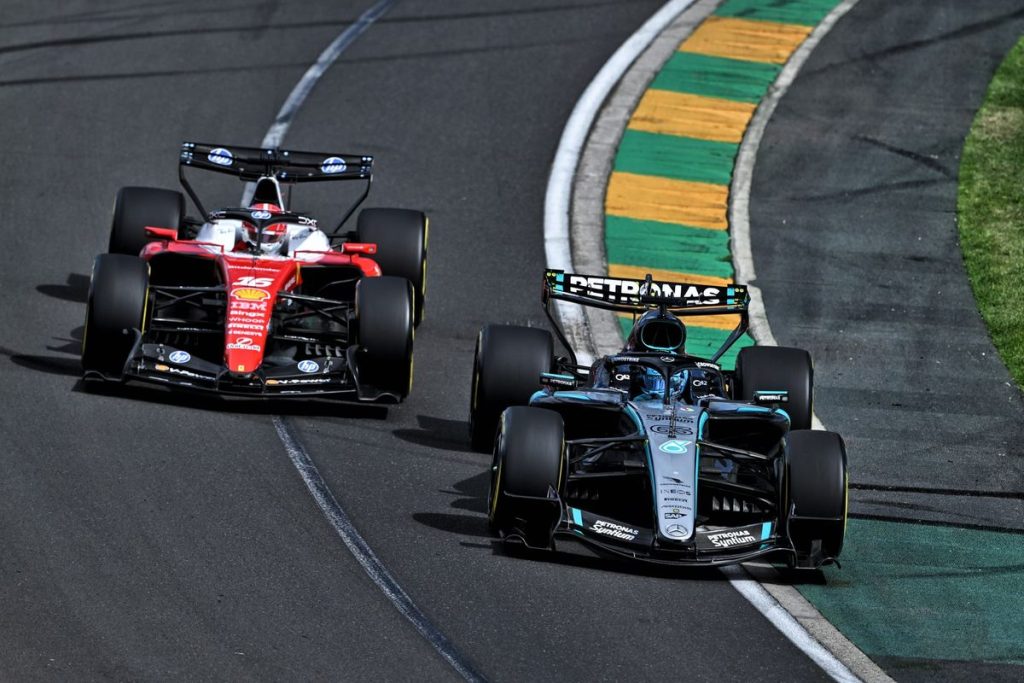
The British Grand Prix: The Rookie Error Context
Silverstone was a fascinating study in statistical variance. Antonelli put it on pole again. On Sunday, a poor launch and an aggressive defensive drop-off saw him tumble down the order to finish outside the points. Hamilton, utilizing masterclass tire management in damp conditions, secured a brilliant podium for Ferrari.
My Take on Silverstone: The media went crazy after Silverstone, shouting that the kid isn’t ready because he failed to score a point. That is pure reactionary journalism. If you actually look at the lap tracking, Antonelli suffered a bizarre Mercedes wheel shield failure that caused him to go off the circuit several times, ultimately leading to a track limits penalty. His raw recovery pace matched the leaders’ telemetry click-for-click. He had a bad afternoon due to mechanical misfortune. But if your worst day is a mechanical fluke out of the points, while your average day is a dominant victory, your front-office value is still skyrocketing.
The Financial and Strategic Ledger: Front Office Chess
To truly evaluate this transition, we have to step away from the pit wall and enter the executive boardrooms in Stuttgart and Maranello. This isn’t just a sporting comparison; it’s an asset management paradigm.
When Ferrari signed Hamilton, they didn’t just buy a driver; they bought a global marketing ecosystem. The immediate bounce in Ferrari’s stock price and the massive influx of tier-one sponsorship revenue completely justified the financial outlay on paper. Hamilton is a luxury asset designed to maximize short-term capital and bring immediate stability to a garage that historically suffers from political volatility.
But look at what Toto Wolff accomplished from a capital allocation standpoint:
- Salary Savings: Mercedes swapped a massive veteran salary for a rookie-scale contract. That huge cap flexibility allows Mercedes to channel maximum financial and engineering resources into their active aerodynamics development.
- Roster Longevity: Hamilton is in his 40s. Ferrari has locked themselves into a multi-year investment with an asset that is naturally entering the tail-end of its performance depreciation curve. Mercedes has secured a teenager who could realistically anchor their driver lineup for the next fifteen years.
Mercedes essentially executed a perfect corporate pivot. They shed a high-cost legacy asset at the absolute peak of its value and replaced it with a hyper-efficient, low-cost asset that is currently generating a superior sporting return on investment.
Telemetry Breakdown: The Physiological Edge
If you pull up the overlay telemetry from their matching years at Mercedes and compare it to their current tracking, you can see exactly where Antonelli is finding his single-lap performance edge over Hamilton. It comes down to brake application and corner phase transition.
The 2026 regulation changes introduced a major set of technical resets, including a revised power unit configuration and new active aerodynamics. These ground-effect cars require a driver to constantly manipulate the aerodynamic platform under heavy braking. Hamilton has historically preferred a stable, predictable rear end on entry—a characteristic that made him devastatingly consistent across his career. Antonelli, however, thrives on a micro-rotational car setup.
Telemetry profiles from the mid-speed complexes in Barcelona and Suzuka show that Antonelli is applying peak brake pressure later than Hamilton. More impressively, his transition from full brake pressure to throttle application is sharper.
He is willing to carry an unstable, sliding rear platform through the apex because his physiological reaction times are at their absolute peak. Hamilton’s veteran experience allows him to match Antonelli’s tire management on Sundays, but on Saturdays, biology and physics are favoring the teenager.
Market Ledger: Betting and Fantasy Trends
If you are playing the F1 fantasy markets or tracking line movements in the sportsbooks, the shift in value over the last nine weeks has been unprecedented.
- Championship Futures Shift: Antonelli opened the 2026 season as a significant longshot to win the Drivers’ Championship. Following his dominant displays in Monaco and Canada, bookmakers have aggressively adjusted his line to make him the betting favorite.
- The Head-to-Head Vector: Betting Antonelli over Hamilton in Saturday qualifying match-ups has turned into an incredibly high-yield strategy. Until the sportsbooks artificially inflate Antonelli’s single-lap pricing, the analytical value remains squarely with the Mercedes garage.
- The Podium Floor: If you are building a safe fantasy roster, Hamilton remains a premier asset. His high finishing rate in the top 10 this year means his scoring floor is bulletproof. But if you are chasing tournament-winning ceilings, Antonelli’s high win-probability multiplier makes him a mandatory play.
Conclusion
When you ignore the marketing campaigns, the historic legacies, and the emotional attachment to the number 44, the data delivers an incredibly clear verdict. Mercedes’ teenage gamble is absolutely paying off.
Ferrari got exactly what they paid for: a legendary champion who brought immediate respectability, commercial gravity, and rock-solid podium consistency to Maranello. Hamilton is doing an excellent job.
But Toto Wolff didn’t want an excellent job; he wanted to solve the next decade of the speed equation. By trusting the internal data tracking metrics on Antonelli’s junior career and refusing to flinch when Hamilton walked, Wolff secured a generational driver at a fraction of the market cost.
Antonelli has occasional rookie blips like we saw with the mechanical misfortune at Silverstone, but his raw single-lap velocity, his matching race-pace telemetry, and his current 25-point cushion at the top of the world championship prove that Mercedes didn’t lose a step when their icon walked away. They actually found a faster gear.
Let’s stop looking at names and start looking at execution. Antonelli is yielding a higher return on investment than Hamilton across almost every performance metric. Mercedes won the divorce. Toto Wolff’s transition model is a masterclass in front-office asset allocation. Kimi Antonelli is currently outperforming Lewis Hamilton by every defining performance matrix in modern motorsport.