How Andor Stripped Away Star Wars Mythos to Build a Grounded Anatomy of Revolution
For nearly fifty years, Star Wars has been locked inside a golden cage of its own making. Since 1977, George Lucas’s grand space opera has operated on a foundational myth: the belief that history is decided by extraordinary individuals born with space magic running through their veins. We have been conditioned across decades of films, animated shows, and spin-offs to view galactic conflict as a cosmic game of family lineage.
If an empire collapses, it’s because a chosen farm boy swung a lightsaber, confronted his dark lord father, and fulfilled an ancient prophecy. The ordinary people of the galaxy—the millions of workers, mechanics, clerks, and citizens living under the heel of tyranny—were relegated to background decoration. They were cannon fodder in stormtrooper suits or helpless villagers waiting to be rescued by a Jedi knight descending from the heavens.
Then came Tony Gilroy’s Andor.
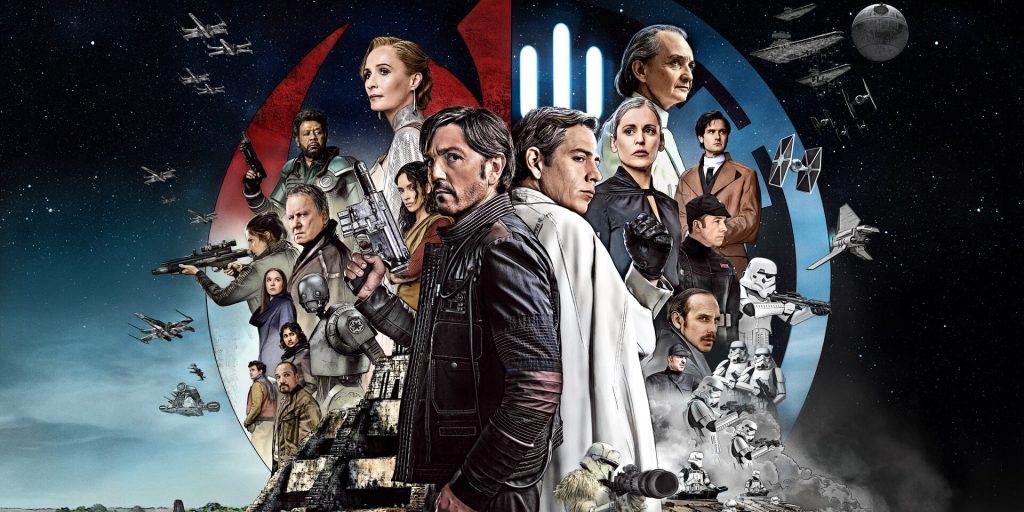
When the series debuted on Disney+, it felt less like a new chapter in a beloved franchise and more like a tactical, brilliant act of narrative sabotage against the very tropes that built the brand. There are no lightsabers in Andor. There are no Skywalkers, no midichlorians, no ancient prophecies, and no cute marketable creatures designed to sell plush toys.
Instead, Tony Gilroy delivered something infinitely more dangerous, visually breathtaking, and intellectually profound: a raw, gritty, adult study of how fascism actually operates, and a terrifyingly realistic anatomy of how genuine anti-authoritarian revolutions are born.
My take on Andor is that it stands as the absolute high-water mark of television storytelling in the Star Wars universe—and perhaps in modern science fiction as a whole.
By grounding the production in massive practical sets defined by cold, brutalist architecture, shifting the focus to corporate bureaucracy and localized oppression, and detailing the messy, morally compromised logistics of rebellion, Andor stripped away space opera mythology to reveal the bloody, human mechanics of freedom. It proved that the most compelling story you can tell in a galaxy far, far away isn’t about space magic; it is about ordinary, desperate people deciding that they would rather die on their feet than live one more day under the quiet, suffocating weight of an imperial boot.
Part I: Practical Sets over Digital Green Screens
To understand how Andor completely resets the visual expectations of science fiction television, you have to look at how the physical world of the show was constructed.
Over the last decade, high-budget sci-fi and superhero productions have become dangerously reliant on digital volume screens—massive 360-degree LED soundstages like the Volume. While revolutionary, this technology has an insidious side effect: it tends to make environments feel static, sterile, and strangely disconnected from the actors. The backgrounds look like high-resolution desktop wallpapers, rendering light without real atmospheric depth, while actors stand on polished studio floors trying to react to digital illusions.
Tony Gilroy and production designer Luke Hull flatly rejected that digital shortcut. Instead, they built massive, physical, real-world practical sets—including a sprawling, ten-acre outdoor city block for the planet Ferrix constructed at Little Marlow Studios in England.
That decision changes every single frame of the series.
When Cassian Andor walks down the streets of Ferrix, you aren’t looking at a digital projection. You are watching an actor step onto actual concrete, kicking up real dust, dodging real rust-covered speeders, and interacting with buildings that feel weighed down by decades of industrial smoke, grime, and wear.
The visual design of the Empire is rooted deeply in real-world Brutalism and mid-century totalitarian architecture. Look at the Imperial Security Bureau (ISB) headquarters on Coruscant or the administrative outposts on planets like Aldhani and Narkina 5.
There are no slick, futuristic space-age curves or fantasy elements. There are only towering, oppressive slabs of sterile white stone, sharp geometric concrete angles, and endless corridors of blinding fluorescent lights. The architecture doesn’t just host the characters; it dominates them. It screams an imperial ideology that demands absolute order, cold efficiency, and the complete erasure of individual human identity.
My take on this commitment to physical architecture is that it anchors the story in a visceral reality.
When a stormtrooper unit marches down a street on Ferrix, their boots don’t make a sound design effect over a digital green screen—they strike real brickwork. You can feel the acoustic echo off the walls. You can see the condensation on the metal doors, the grease on the mechanics’ hands, and the cold sweat on an officer’s forehead. By grounding the show in practical, heavy, brutalist reality, Gilroy removes the cozy, fairytale distance of space opera. He forces the audience to stop looking at Star Wars as a toy-box fantasy, and start experiencing it as a living, breathing political reality where actions have immediate, irreversible physical consequences.
Part II: Corporate Bureaucracy and Systemic Oppression
In traditional Star Wars lore, the Empire is evil in a classic, theatrical way. Villains wear black capes, choke generals with their minds, blow up whole planets to demonstrate power, and laugh menacingly from throne rooms. It is a cartoonish, grand villainy that makes for great mythology, but tells us very little about how real-world authoritarianism takes root.
Andor takes a far more chilling and historically accurate approach. It exposes what political philosopher Hannah Arendt famously called the “banality of evil.”
The Empire in Andor isn’t run by cackling Sith lords sitting in the dark; it is run by middle-management bureaucrats sitting in bright, air-conditioned offices, staring at data pads, filing middle-tier reports, and debating logistics.
Look at the character of Syril Karn, the disgraced corporate security officer whose obsessive, pedantic desire for order sets the entire plot into motion.
Syril isn’t a evil monster motivated by dark magic or hatred. He is a pathetic, socially inept middle-manager who genuinely believes in the rules. He wears his uniform tailored because he craves status, and he views the messy, informal, communal lives of the working class on Ferrix as an offensive disorder that must be tidied up by enforcement.
Or look at Dedra Meero, the ruthless ISB supervisor who climbs the imperial ranks by analyzing supply-chain anomalies and connecting minor thefts of military tech across sectors.
In any other corporate drama, Dedra would be framed as the heroic female protagonist breaking through a glass ceiling in a male-dominated workplace. She is hardworking, brilliant, hyper-focused, and unappreciated by her lazy supervisors. Yet, her professional ambition is dedicated entirely to optimizing a fascist police state—hunting down dissidents, ordering torture, and turning communities into surveillance sectors.
My take on this portrayal of imperial bureaucracy is that it makes the Empire infinitely more terrifying than a Death Star.
A planet-destroying superweapon is a fantasy threat. But an office full of quiet, ambitious bureaucrats systematically altering shift schedules, raising taxes on miners, revoking travel permits, and monitoring communications to squeeze a population dry? That is how real-world fascism actually operates.
Andor shows that tyranny doesn’t begin with a grand military parade; it begins in quiet rooms where ambitious men and women fill out forms, approve budgets, and treat human freedom as an administrative inefficiency to be managed out of existence.
Part III: The Meat Grinder of Narkina 5—Labor, Surveillance, and Dehumanization
If there is a single narrative arc in Andor that encapsulates its brutal, systemic view of authoritarianism, it is the three-episode prison sequence on Narkina 5. It is, quite simply, one of the most brilliant allegories for unbridled industrial exploitation ever put on television.
Cassian Andor is not arrested on Narkina 5 because he is a dangerous rebel hero. He is arrested while walking down a beach on a resort planet simply because an imperial judge needed to fill a quota under new, draconian anti-subversion laws. He is sentenced to six years of hard labor without a fair trial, given a fake name, and dropped into a sea-bound, sterile white factory facility where human beings are stripped of their clothes, their shoes, their names, and their humanity.
The design of the prison on Narkina 5 is a nightmare of total surveillance and psychological control.
The floors are made of conductive steel that can be charged with thousands of volts of electricity at the flip of a switch, turning any minor sign of disobedience or slack in production into instantaneous, agonizing pain. The prisoners are forced into intense, eight-man teams competing against each other twelve hours a day to build massive, mysterious metal mechanisms—never knowing what they are building, only knowing that the lowest-performing team on the floor gets shocked, while the highest-performing team gets a splash of flavor in their liquid nutrient paste.
Look at how the show captures the slow, soul-crushing reality of this labor.
The terror doesn’t come from guard violence; there are barely any guards on the floor. The genius of the system is that it turns the prisoners into their own oppressors. Through Andy Serkis’s legendary performance as Kino Loy—a inmate unit manager who believes that if he just follows the rules and hits his numbers, the Empire will eventually let him go home—we see how total surveillance breaks the human spirit. Kino doesn’t want to fight; he wants to manage. He has internalized the metrics of his captors because believing in the system is the only psychological defense mechanism he has left against despair.
My take on the Narkina 5 arc is that it acts as the ultimate turning point for Cassian’s political awakening.
Before Narkina 5, Cassian was an mercenary cynic trying to run away from the conflict, looking out only for himself and his small circle on Ferrix. But inside that sterile, white factory floor, he sees the logical end point of the Imperial machine: human beings reduced to disposable cogs in an automated factory, worked to death, and quietly disposed of when their utility ends.
When the prisoners finally discover that no one is ever getting released—that a man who finished his sentence was simply recycled back into another floor—the illusion shatters. The realization that the system cannot be bargained with, pacified, or survived through obedience is what unlocks their collective rage, sparking a prison break that stands as one of the most thrilling, triumphant moments in modern television history.
Part IV: The Morality of Resistance—Luthen Rael and the Cost of Rebellion
If the Empire in Andor is stripped of its theatrical fantasy, the Rebellion is subjected to an even harsher, more uncomfortable moral deconstruction. In standard Star Wars, the Rebel Alliance is an organization of pure, shining righteousness. They wear light colors, give inspiring speeches about hope, and fight with clean, noble hands.
Andor incinerates that sanitized myth through the character of Luthen Rael, played with staggering theatrical power by Stellan Skarsgård.
Luthen is not a Jedi or a noble senator leading a clean resistance from a war room. He is a covert spymaster hiding in plain sight as a high-end antiquities dealer on Coruscant. He operates in the deep, filthy shadows, organizing insurgent cells, funding heists, and making ruthless, morally repulsive tactical decisions to force the galaxy into war.
Look at the monologue Luthen delivers in the eighth episode to an imperial informant—a scene that instantly earned a spot among the greatest pieces of writing in sci-fi history.
When asked what he sacrifices for the cause, Luthen doesn’t talk about hope or glory. He outlines the brutal, tragic reality of his existence:
“I’ve given up all chance at inner peace. I’ve made my mind a sunless space. I share my dreams with ghosts. I wake up every morning to an equation I wrote 15 years ago from which there’s only one conclusion: I’m condemned to use the tools of my enemy to defeat them. I burn my decency for someone else’s future. I burn my life to make a sunrise that I know I’ll never see.”
My take on Luthen Rael is that he represents the tragic necessity of real-world revolution. Rebellions are not fought by saints with clean hands; they are started by compromised, desperate operatives who are willing to become monsters so that future generations have the luxury of remaining human.
Luthen understands that the Empire cannot be defeated by quiet disapproval or polite political debate in the Senate. To wake the galaxy up from its comfortable apathy, he actively orchestrates events to force the Empire into overreacting—sacrificing his own rebel soldiers and inciting brutal imperial crackdowns, knowing that only extreme oppression will finally force ordinary citizens to fight back.
By presenting resistance through this morally gray lens, Tony Gilroy elevates Andor far beyond a simple good-versus-evil story. He forces the audience to confront the heavy, tragic costs of revolution. He demonstrates that freedom requires dirty work, horrific sacrifices, and the surrender of personal morality by those who pave the way for a better world.
Part V: The Power of the Collective—The Funeral on Ferrix and the Spark of Uprising
Everything in Andor—the practical architecture, the corporate bureaucracy, the prison exploitation, and the spymaster’s cold calculations—converges in the season finale on the dust-choked streets of Ferrix. The final episode, centered around the funeral of Cassian’s adopted mother, Maarva Andor, is a cinematic triumph of political storytelling.
Ferrix is not a planet of chosen heroes or strategic military importance. It is a working-class planet of scrap metal workers, mechanics, and bricklayers—ordinary people who value community, tradition, and their local solidarity above all else. When the Imperial military occupies their town, banning their traditional funeral music and filling their streets with armed soldiers, the tension boils over.
Look at how the climax unfolds not through a lightsaber duel, but through a communal funeral procession.
The people of Ferrix don’t march with high-tech military weapons; they march with a local brass band playing a slow, somber, beautiful dirge. They carry a heavy stone brick containing the ashes of their elder. They walk shoulder-to-shoulder through the narrow brutalist streets, pushing past the lines of nervous, heavily armed imperial troopers who don’t understand the culture, the language, or the deep historical roots of the people they are trying to occupy.
Then comes the holographic speech from the late Maarva Andor, delivered to the crowd from beyond the grave.
She doesn’t deliver a speech about cosmic destinies or grand galactic politics. She speaks directly to her neighbors about the quiet, insidious nature of oppression—how they let the Empire sleep in their streets, how they looked away when their neighbors were taken, and how they convinced themselves that if they just kept their heads down, the shadow would pass. Her final, roaring command to her community isn’t a call to politics; it is a primal, human command: “Fight the Empire!”
My take on this finale is that it encapsulates the true thesis of Andor. Revolution doesn’t start in the halls of parliament or through the heroic actions of a single savior. It starts when ordinary, working-class people reach their absolute limit, look at their neighbors, and realize that they outnumber their oppressors.
When a young Ferrix worker uses Maarva’s funeral brick to strike down an imperial officer, igniting a chaotic, violent street riot where citizens fight armed troopers with improvised tools, scrap metal, and raw rage, we aren’t watching a space opera fantasy. We are watching a historical uprising. We are seeing the exact moment where passive endurance transforms into active, unstoppable resistance.
Part VI: Why Andor Changes Star Wars Forever
The legacy of Andor will present a creative challenge to the future of the Star Wars franchise for decades to come. By proving that a story set in this universe can achieve the narrative weight, structural sophistication, and political depth of prestige dramas like Chernobyl or The Wire, Tony Gilroy exposed the limitations of relying purely on nostalgia, legacy characters, and fan service.
For years, the franchise believed that to make a Star Wars story work, you had to keep returning to the same small well of familiar elements: cameos, lightsabers, familiar family names, and comfortable visual tropes.
Andor proved that the Star Wars galaxy is vast, mature, and capable of harboring profound artistic masterpieces—provided creators are brave enough to leave the security blanket of mythology behind and engage with real human emotions, real political systems, and real stakes.
It showed that you don’t need a Jedi to make a scene breathtaking. You just need exceptional writing, patient pacing, practical craftsmanship, and a deep respect for the intelligence of the audience.
The Verdict: A Masterpiece of Anti-Authoritarian Art
Andor is a monumental, staggering achievement in modern science fiction television. It takes a franchise built on space fantasy and transforms it into a fierce, grounded, and terrifyingly relevant study of fascism, systemic labor exploitation, and anti-authoritarian uprising. Through its practical brutalist sets, sharp portrayal of corporate bureaucracy, terrifying prison mechanics, and morally complex resistance figures, it strips away decades of pop-culture mythos to deliver a raw, human masterpiece.
It reminds us that history is not written by chosen ones or magical legacies. History is shaped by the nameless millions who refuse to be crushed by the machinery of tyranny—the workers, the dreamers, the prisoners, and the rebels who burn their lives to build a sunrise they will never see.
When the final credits roll on Ferrix, leaving you with the sound of wind whistling through the scrap yards and the echo of brass drums in your ears, you realize that you haven’t just watched a great television show.
You have witnessed a story that honors the human spirit at its most resilient, defiant, and unbreakable.