Star Wars Without the Magic: How Ditching Lightsabers in Andor Made the Rebellion Terrifyingly Real
Let’s be truthful regarding what Star Wars had turned into prior to Tony Gilroy taking control. For many years, the distant galaxy was basically a multi-billion-dollar fantasy realm functioning on a child’s perception of right and wrong. It was a galaxy governed by a select few genetically superior space warriors, age-old prophecies, luminous laser blades, and a magical energy force that effortlessly addressed every significant political turmoil in the universe.
What if a fascist government constructed a moon-sized world-destroying superweapon? Don’t stress over the logistical nightmare of how an empire coordinated labor, resources, and administrative systems to build it.
Simply dispatch an abandoned farm youth with unique lineage to fire a torpedo into an exhaust shaft since “the Force demanded it.” What if a totalitarian regime subjugated an entire star system? Ignore the pain of the local people; simply anticipate the unavoidable confrontation between a masked antagonist in dark armor and his sorrowful relative carrying a glowing sword.
We enjoyed it, naturally. It’s soothing mythology. However, as time passed, that dependence on “Space Wizard” motifs transformed a universe created from 1970s anti-imperialist anxiety into a monotonous, lifeless spectacle. It shielded us from the true nature of totalitarianism and minimized the idea of “rebellion” to a select group for the elite, Jedi remnants, and hereditary lineages.
Then arrived Andor. Upon the release of Andor’s first season, Tony Gilroy undertook a truly groundbreaking action concerning George Lucas’s work: he methodically removed the enchantment.
Andor features no Jedi. Sith do not exist. There are no illuminated lightsabers activated in dim hallways, no appearances by Skywalker, no charming extraterrestrial characters meant to promote plush toys, and no miraculous intervention saving the heroes at the final moment.
Rather, Gilroy compels us to confront the harsh, frightening, unappealing mechanisms of anti-fascist struggle. He presents us with a universe where the Galactic Empire is more than a sinister dark-side cult; it’s an oppressive, corporate-bureaucratic entity overseen by middle managers in custom suits. Furthermore, he illustrates that the Rebellion was not formed by flawless heroes in immaculate white cloaks, but by anxious, deeply imperfect, paranoid, and ethically compromised individuals who were compelled to commit dreadful acts in secrecy for the sake of others’ enlightenment.
By stripping away the space magic, Andor not only matured Star Wars but also rendered the battle against fascism strikingly, hauntingly authentic.
Part I: Totalitarianism in a Cubicle, The Terrifying Banality of Imperial Evil
Prior to Andor, in what ways did Star Wars portray the Empire? It was typically depicted by laughing emperors casting purple lightning, stern officers stationed on the bridges of Star Destroyers, and emotionless Stormtroopers who couldn’t hit a barn door from five steps away. The Empire was malevolent as its rulers were dark-side fanatics dressed in black who destroyed planets for theatrical impact.
Gilroy discards that exaggerated villainy and substitutes it with something much more familiar to those who have paid taxes, been employed in a corporate environment, or studied history: the ordinariness of bureaucratic wrongdoing.
Observe the way the Empire is presented in the initial arcs of Andor. We are not brought to a Sith temple or the Death Star. We are brought to the clean, fluorescent-lit offices of Preox-Morlana, a corporate security agency, and subsequently into the immaculate, white-walled meeting rooms of the Imperial Security Bureau (ISB) on Coruscant.
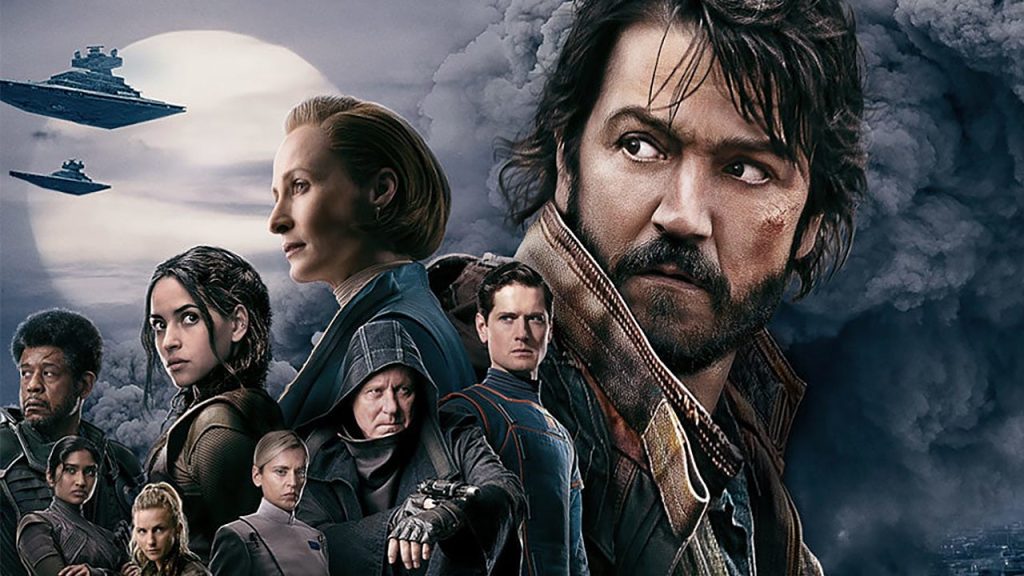
The real antagonists of Andor don’t use dark sorcery; they use spreadsheets, data metrics, monitoring records, and legal power.
Consider Supervisor Dedra Meero (portrayed with a haunting, star-sapphire intensity by Denise Gough). Dedra is not a villainous character twirling a mustache. Actually, in a typical corporate workplace drama, she would undoubtedly be the main character! She is a clever, driven, highly capable woman battling the complacent, old-boys-club sexism of her fellow ISB colleagues. She puts in long hours, studies trends that others overlook, and employs reasoning to link unrelated crimes throughout the galaxy.
And what is she working so hard to achieve? The total, systematic suppression of human liberty.
My Take: Dedra Meero is the most terrifying villain in modern Star Wars precisely because she is so relatable. She doesn’t want to destroy the galaxy; she wants to organize it, monitor it, and file it neatly into digital cabinets. She proves that fascism doesn’t start with a villain burning down a village—it starts with a middle manager realizing that if she reorganizes the logistics schedule, she can extract 15% more labor from a subjugated workforce.
In Andor, the Empire’s power does not lie in its ability to destroy a world from orbit; it lies in its ability to incrementally strip away human dignity through bureaucratic creep. It’s the Imperial officer on Ferrix who casually changes a curfew, doubles a tax rate, or institutes a public hanging for minor dissent to hit a quarterly quota. It’s the cold, unfeeling machinery of the Narkina 5 prison complex, where floors are electrified and men are worked to death building parts for a machine they aren’t even allowed to see.
When the enemy is a faceless, omnipresent administrative monster, you realize that a Lightsaber cannot fix this world. You cannot slice through a spreadsheet with plasma. The threat is structural, and structural evil requires a completely different kind of fight.
Part II: Why Guns and Money Matter More Than Faith
If the Empire in Andor is built on administrative logistics, the Rebellion is forced to meet them on the exact same battleground. In classic Star Wars, the Rebel Alliance always seemed to magically possess a fully stocked fleet of X-wings, shiny uniforms, medical bays, and secret bases hidden in ancient temples. We never asked where they got the money for fuel, where they bought their blasters, or how they fed thousands of soldiers hiding on ice planets. The Force, presumably, provided.
Andor is obsessed with the unsexy, dangerous logistics of waging an underground war against a superpower. Enter Luthen Rael (Stellan Skarsgård), a character who immediately steps into the pantheon of the greatest figures ever conceived in this franchise. On the surface, Luthen runs an high-end antiquities shop on Coruscant, catering to wealthy Imperial senators like Mon Mothma. In reality, he is the mastermind of a fragile, sprawling, fractured network of anti-Imperial cells.
Look at what Luthen spends his time doing in Season 1. He isn’t training padawans in meditation or searching for ancient holocrons. He is:
- Managing black-market funding: Trying to procure millions of credits to buy weapons and pay off mercenaries.
- Managing communication security: Using coded radios, burner identities, and dead drops to avoid the ISB’s surveillance grid.
- Managing human asset risk: Deciding which allies are liabilities that need to be assassinated before they talk under interrogation.
The standout moment of Andor’s initial act—the Aldhani heist—serves as a brilliant declaration on the nature of guerilla warfare. The objective isn’t to detonate a superweapon. The objective is to take the full payroll of an Imperial garrison!
Why is that? Due to the exorbitant costs of revolutions. You have to acquire fuel, settle payments to corrupt customs agents, obtain medical supplies, and acquire weapons from the black market. The Aldhani rebels are not noble heroes; they are a suspicious collective of zealots, ex-soldiers, and desperate hired guns who have been residing in a chilly, wet valley for months, subsisting on meager supplies and debating their trustworthiness.
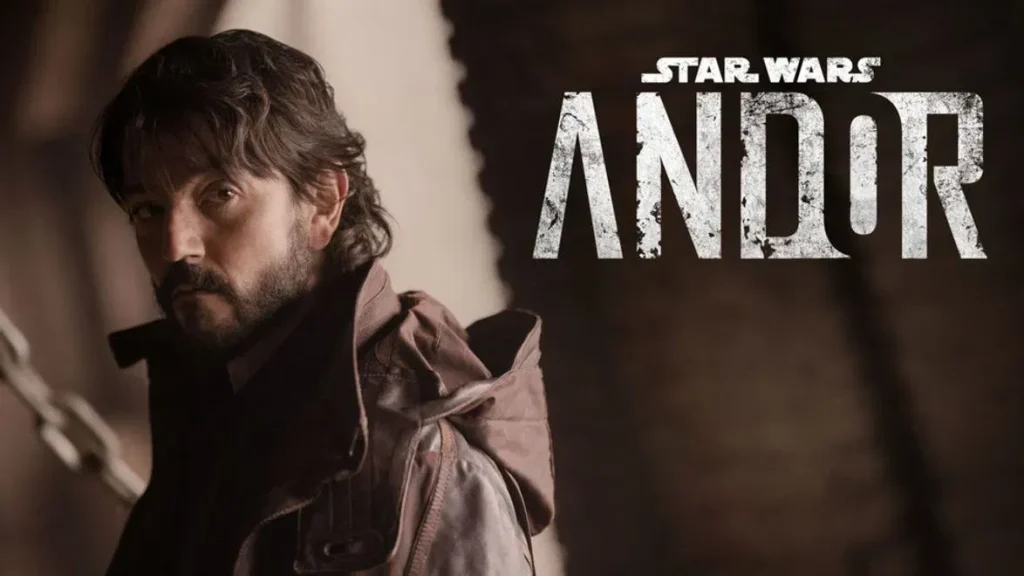
By rooting the Rebellion in logistics, Gilroy ensures that each victory feels justified through effort, sacrifice, and tactical planning instead of miraculous help. As the getaway ship successfully flees Aldhani amidst the stunning Eye of Aldhani celestial event, your heart races—not due to a Jedi lifting a starfighter from the sky with his thoughts, but because you observed these anxious individuals meticulously plan payload weights, guard shift timings, and exit paths over three episodes.
Part III: Cassian’s Long Walk to the Cause
In traditional mythic storytelling, a hero answers “the call to adventure” because it is their destiny. Luke Skywalker leaves Tatooine because his uncle’s farm is burned, but also because he is built for greatness—he has the blood of a Jedi knight flowing through his veins.
Cassian Andor (Diego Luna) has no special blood. He has no prophecy hovering over his head. He is an undocumented migrant from Kenari living on the industrial scrapyard planet of Ferrix, hustle-ing to survive, dodging local corporate police, lying to his friends, and owing money to half the town. What makes Cassian’s journey throughout Season 1 so profoundly human is that he does not want to be a hero.
When Luthen recruits him for the Aldhani job, Cassian isn’t doing it because he believes in “freedom” or the “Rebel Alliance.” He is doing it for cash so he can take his adoptive mother, Maarva (Fiona Shaw), and run away to hide somewhere warm and safe. He is cynical, pragmatic, and deeply suspicious of ideological grandstanding.
Gilroy uses Cassian to illustrate how real people are radicalized by authoritarian regimes. Fascism does not leave you alone just because you choose to ignore it.
Look at how Cassian ends up in the horrific, automated prison on Narkina 5. He isn’t arrested for being a rebel. He isn’t caught committing a high-stakes crime. He is literally walking down a beach in a vacation resort, minding his own business, when a bored Shoretrooper stops him, accuses him of “sweating,” applies a sweeping new Imperial emergency decree, and sentences him to six years of hard labor without a trial.
That is how totalitarianism operates. It doesn’t care if you are neutral. It will crush you anyway simply because its gears require human bodies to keep grinding.
Cassian’s transformation from a selfish survivor into a radicalized revolutionary doesn’t happen during a grand speech in a senate chamber. It happens in the electrified bays of Narkina 5, watching a quiet old man named Ulaf die of a stroke because the prison medical system is an absolute joke. It happens when he realizes the terrifying truth of the facility: no one is ever getting out, because the system cannot afford to let the truth leak.
When Cassian finally utters those iconic words to his fellow prisoners, it hits with the force of a nuclear blast. It isn’t a Jedi slogan. It is the raw, collective scream of human beings who have been pushed past the absolute limit of what they can endure, realizing that solidarity is their only remaining weapon against annihilation.
Part IV: Luthen Rael and Mon Mothma’s Devastating Choices
The most shocking element of Andor for long-time Star Wars fans is its refusal to keep the heroes’ hands clean. In the classic trilogy, the Rebel Alliance is morally immaculate. They fight honorably, save their friends, and never cross lines that would compromise their moral purity. But Andor understands a bitter, historical reality: you cannot fight an asymmetrical war against an amoral fascist empire without losing a piece of your soul.
This theme is embodied in two characters operating at opposite ends of the social spectrum: Luthen Rael in the shadowy underworld, and Senator Mon Mothma (Genevieve O’Reilly) in the high-society parlors of Coruscant.
Let’s talk about Luthen’s monologue in Episode 10, “One Way Out.” It is, without hyperbole, the single greatest piece of writing in the history of the Star Wars franchise.
When an Imperial mole inside his network asks Luthen what he sacrifices for the cause, Luthen doesn’t offer platitudes about hope or light. He laughs in his face and lays out the devastating price of his life’s work:
“Calm. Kindness. Kinship. Love. I’ve calm-ed my mind to an armor. I’ve given up all chance at inner peace. I’ve made my mind a sunless space. I share my show with a ghost… I’m condemned to use the tools of my enemy to defeat them. I burn my decency for someone else’s future. I burn my life to make a sunrise that I know I’ll never see.”
Read those words again. That is not the philosophy of a space knight. That is the philosophy of a historical partisan leader, a spy master, a man who knows that by organizing a revolution, he is forfeiting his own spiritual salvation.
Luthen deliberately allows a cell of 50 rebel fighters—led by a man who trusts him—to be ambushed and slaughtered by the Empire because saving them would reveal to Dedra Meero that the ISB has a mole in their ranks. He chooses the long-term survival of the movement over the lives of his own men. It is a terrifying, cold-blooded calculation, and Andor refuses to neatly judge him for it.
Simultaneously, look at Mon Mothma’s arc on Coruscant. While traditional Star Wars depicts her as a serene, stately leader, Andor shows her living in a gilded cage of absolute paranoia. Every conversation she has in her own home is monitored. Her husband is a self-absorbed aristocrat who doesn’t understand her risk.
To hide the paper trail of the funds she is secretly funneling to Luthen’s rebel network, Mon Mothma is forced to make a harrowing personal compromise: she arranges a marriage between her thirteen-year-old daughter and the son of a shady, corrupt mob boss-esque banker named Davo Sculdun.
To save the galaxy, Mon Mothma has to sell her own child into a regressive, patriarchal political arrangement. The camera lingers on her face in the back of her speeder as she watches her daughter meet the boy—she is weeping internally, knowing that the price of freedom for trillions of strangers was the sacrifice of her own family’s innocence.
Andor doesn’t allow anyone to stay clean. It demonstrates that fighting evil requires making monstrous choices in the dark, so that future generations can have the luxury of living in the light.
Part V: Ferrix and the Death of the “Chosen One”
Perhaps the most significant thematic departure Andor makes from the rest of the Star Wars canon is its total rejection of “Chosen One” elitism in favor of collective political action. In the Skywalker Saga, ordinary people are background props. They are citizens waiting to be saved or collateral damage in a family drama between a grandfather, father, and son who happen to possess magic blood.
In Andor, the ultimate hero of the story is not an individual; it is the working-class community of Ferrix. Ferrix is an industrial, blue-collar world built on trade, metal salvaging, and deep-seated communal tradition. They don’t have grand monuments or Jedi temples.
They have a Time Server—a man who stands atop a tower with two massive hammers, manually striking an anvil to signal the start and end of the workday for the entire city. They have the Daughters of Ferrix, a community organization of older women who look out for one another. They have a tradition where, when someone dies, their ashes are mixed with brick mortar to become part of the physical buildings of the town.
When Maarva Andor dies near the end of Season 1, her funeral becomes the catalyst for an explosion of anti-Imperial resistance.
The climax of the Season 1 finale is not a duel between two champions. It is a funeral procession. The entire town marches down the narrow cobblestone streets, led by a local brass band playing a somber, haunting, slow-building march. They are surrounded on all sides by heavily armed Imperial troopers, riot shields, and armored vehicles.
And then, Maarva’s giant, holographic stone projection speaks to her people from beyond the grave. She doesn’t preach religion or magic. She delivers a raw, populist rallying cry to the working people who built the city:
“There is a wound that won’t heal at the center of the galaxy. There is a darkness reaching like rust into everything. It’s easy to stare at the darkness and feel hopeless… The Empire is a disease that thrives in the dark. It is never more alive than when we sleep… Fight the Empire!”
What follows is not a clean, cinematic victory. It is an ugly, chaotic, desperate street riot.A young local boy throws a homemade pipe bomb. An Imperial officer panics and orders his troops to open fire into the crowd. Ordinary workers—mechanics, salvagers, old women, young men—use their bare hands, wooden tools, and bricks made from the ashes of their dead ancestors to fight back against armored troopers.
In that glorious, terrifying riot, Tony Gilroy captures the true essence of revolution. Empires are not overthrown by lone knights in shiny armor; they are overthrown when ordinary, tired, oppressed people realize that they outnumber their oppressors, reject their own fear, and decide to fight back together.
The Verdict: Why Star Wars Can Never Go Back
Andor is a marvel of contemporary television. It transformed a fifty-year-old fantasy franchise suffocated by nostalgia, self-referential fan service, and corporate caution into a powerful, mature, emotionally impactful exploration of anti-fascist political resistance.
By removing the lightsabers, the Force, and the mystical destiny elements, Tony Gilroy did not destroy Star Wars—he enhanced it to its greatest artistic potential. He demonstrated that the central issue in George Lucas’s universe was never truly about light magic against dark magic; it was about human dignity opposed to systemic oppression.
When the protective barrier of space magic is removed, each laser shot possesses real danger. Each act of treachery wounds deeply. Each sacrifice creates an emptiness in the universe that cannot be filled. You understand that those battling the Empire aren’t motivated by superhuman abilities or divine safeguards; they are compelled to fight because they have no alternative if they wish to stay human.
Andor spoiled conventional Star Wars for many fans, and to be honest? Nice. We don’t require another tale of a concealed Jedi evading Order 66, or yet another hidden relative of Emperor Palpatine resurrecting. We require narratives that highlight the fragility of freedom, illustrating how quickly societies can descend into bureaucratic fascism, and emphasizing the courage, sacrifice, and unity needed to resist and confront it.
Andor revealed the genuine price of a revolution. After witnessing the sunrise that Luthen Rael sacrificed for, your perspective on a starship chase will be forever changed.