Why F1 Team Radio is 10% Strategy and 90% Millionaires Whining
I need everyone reading this to take a brief moment, close your eyes, and picture a multi-million-dollar carbon-fiber hypercar cruising through the iconic Maggots and Becketts complex at Silverstone at 170 miles per hour.
The car is an absolute marvel of modern engineering—a $15 million land rocket constructed by hundreds of aerospace engineers, powered by a hybrid V6 turbo engine pushing 1,000 horsepower, governed by trillions of real-time telemetry calculations processed via cloud supercomputers, and riding on ultra-soft Pirelli rubber compounds designed specifically to stick to asphalt like industrial adhesive.
Inside this hyper-tech masterpiece sits a 25-year-old athlete wearing a custom fireproof suit, getting paid roughly $40 million a year to drive around in circles.
He presses a bright red button on his custom carbon steering wheel, opens a direct audio line to his pit wall, and utters a sentence so drenched in utter misery, despair, and theatrical panic that you would think his car had lost all four wheels and caught fire: “Bono, my tires are dead! They are completely gone, mate! I have zero grip! The car is undriveable!”
Three corners later? He sets the absolute fastest lap of the entire Grand Prix, completely shatters the sector record, and extends his race lead over second place by another 1.8 seconds.
Welcome to Formula 1 in the modern era, where the team radio is officially 10% actual race strategy and 90% pampered, ultra-wealthy, adrenaline-fueled millionaires throwing hysterical temper tantrums at 200 mph.
If you tune into an F1 broadcast without looking at the timing screens, you would honestly believe every single driver on the grid is navigating a broken tractor through a snowstorm while wearing oven mitts. Every bump is an crisis, every degree of track temperature change is a catastrophe, and every set of tires—regardless of whether they were put on forty laps ago or four seconds ago—is always, perpetually, terminally “dead.”
As a guy who spends far too much time staring at raw telemetry graphs, timing deltas, and acoustic radio logs, I think it’s about time we stop taking driver complaints at face value and expose the hilarious gap between dramatic radio moaning and real-world car performance.
The “Dead Tire” Paradox: Telemetry vs. Theater
Let’s start with the absolute greatest running joke in all of global motorsport: the infamous “My Tires Are Dead” radio message. In standard English, saying something is “dead” implies that it has ceased to function. If your phone battery is dead, it doesn’t turn on. If your engine is dead, you aren’t moving.
In Formula 1 driver-speak, however, “my tires are dead” simply translates to: “I am currently feeling slightly less than 100% optimum peak grip, which deeply offends my delicate sensibilities as an elite athlete, but please ignore this because I am about to push the car into the stratosphere.”
When you analyze telemetry from a venue like Silverstone, a track that shreds front-left tires for breakfast thanks to high-load, sustained lateral G-force corners like Copse and Abbey, the numbers tell a story that directly contradicts what the driver is shrieking into his helmet. A driver will jump on the radio on Lap 34 of a stint to report that his front-left tire has “completely fallen off a cliff”.
You pull up the telemetry data. You look at the throttle trace coming out of Turn 14. He’s applying 100% throttle three meters earlier than he did on Lap 20. You look at the steering angle trace. There is zero excessive micro-correction or snappy oversteer. You look at the GPS tracking velocity through the apex of Stowe corner. He is carrying 142 mph through the apex, which is actually two miles per hour faster than his median stint speed!
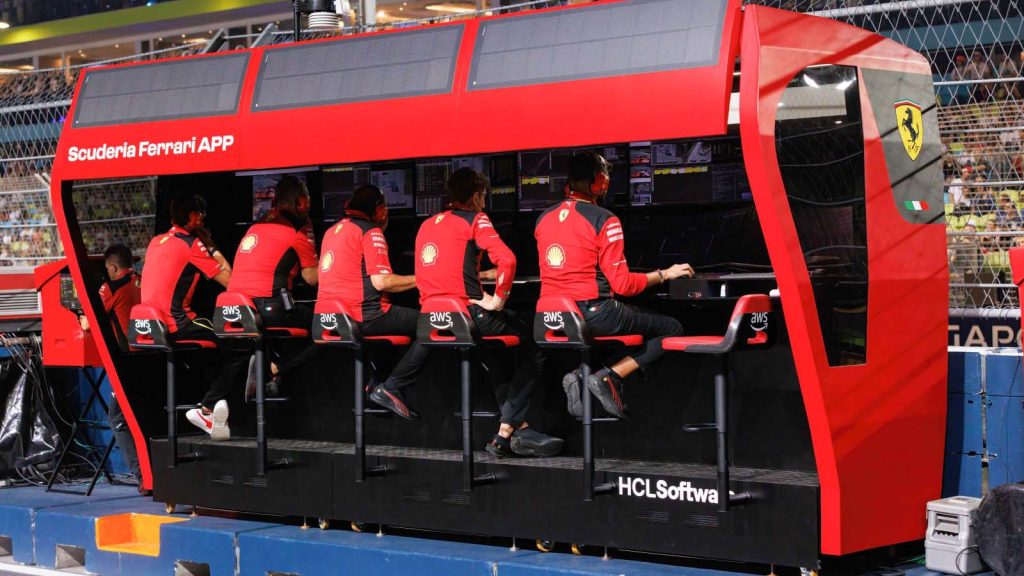
The car isn’t sliding. The rubber isn’t blistering off the carcass. The tire isn’t dead! The driver is just experiencing the normal, predictable 0.05-second-per-lap thermal degradation that every single tire on earth undergoes, but because he isn’t driving on brand-new, sticky qualifying rubber, he reacts like his team intentionally sabotaged his vehicle with secondhand lawnmower parts.
Psychological Warfare: The Fake Radio Bluff
So why do they do it? Why do world-class drivers spend half their mental bandwidth whining on the radio about non-existent problems? It brings us to the most cynical, brilliant, and hilarious aspect of modern F1: Acoustic Tactical Deception.
Every single team radio message broadcast during a race isn’t just heard by the driver’s own race engineer sitting on the pit wall. It is instantly monitored, transcribed, and analyzed in real-time by twenty rival strategy rooms sitting in the paddock, along with dozens of data analysts back at factory headquarters in Brackley, Maranello, and Milton Keynes.
The moment a driver says “Bono, my tires are dead,” the rival team’s strategy computer flashes a yellow alert.
THE F1 RADIO DECEPTION CASCADE
Driver: “Tires are dead!” (Fake Radio Message)
│
Rival Strategy Team Hears Audio Feed
│
Rival pit wall calculates: “He’s weak! Tell our driver to push!”
│
Rival driver burns up HIS tires trying to close the gap…
│
Original driver drops a 1:27.3 Purple Fastest Lap ───► Opponent Trapped!
The rival engineers sit up on their pit wall, look at their own driver, and say: “Push now! Leader is struggling with tires! We can undercut him!” The rival driver responds by hammering his brakes, burning through his own tire life, and attacking the corners to close a four-second gap. And then—BOOM!
The leading driver, who just spent two minutes weeping about his ruined rubber, drops a blindingly fast purple sector time, pulls out another three tenths of a second, and completely demoralizes the guy behind him! It is the ultimate poker bluff, executed at 200 mph.
Lewis Hamilton made a literal art form out of this for a decade. He would complain about his tires with the heart-wrenching theatrical conviction of a Shakespearean actor in the middle of a tragedy, convincing the entire world that his Mercedes was about to roll into the pit lane on bare metal rims… only to stay out for another fifteen laps, lay down fastest lap after fastest lap, and win the Grand Prix by twenty seconds.
It’s not a cry for help. It’s a tactical trap. And the fact that rival strategy departments still fall for it year after year is proof that a driver’s voice carries more psychological weight than a thousand telemetry servers.
The Driver-Engineer Dynamic: Marriage Counseling at 200 MPH
If you want to understand why radio messages sound so absurd, you have to look at the unique, high-stress relationship between a driver and his race engineer. A Formula 1 race engineer is not just a mathematician or a vehicle dynamics expert. They are part operational director, part tactical genius, and part full-time psychiatric therapist for an overly coddled multi-millionaire who is throwing a tantrum inside a tiny carbon fiber tub.
Look at the legendary dynamic between Max Verstappen and his Red Bull race engineer, Gianpiero Lambiase (GP). Max will be leading a Grand Prix by twenty-five full seconds. He has the race completely wrapped up. There is literally zero threat from behind.
Yet Max will jump on the radio screaming: “The downshifts are absolute garbage! The car is bouncing everywhere! My differential is totally wrong! Did you guys even set this car up properly?!”
A normal human being would respond with, “Max, you are winning by half a minute, shut up and drive.”
But GP doesn’t break a sweat. He responds in a deadpan, monotone voice that resembles a bored school principal addressing a disruptive second-grader: “Copy, Max. Display three, position six. Please manage the tires through Turn 9, thank you.”
It is a glorified passive-aggressive marriage played out live on international television. The driver uses the radio as an emotional trash can to dump all his sensory overload, frustration, and perfectionist anxiety onto the pit wall. The engineer’s job is simply to filter out 90% of the hysterical noise, ignore the drama, and feed the driver only the basic, digestible facts required to keep the car on the track.
The “Blame the Car” Reflex: Why Millionaires Never Admit Mistakes
There is another reason F1 team radio sounds like a playground complaint department: The Driver Ego Safety Net.
Elite racing drivers are genetically incapable of admitting they made a personal error. Their brains are wired to believe they are the twenty fastest human beings on planet earth. Therefore, if something goes wrong on track, physics itself must be broken, because it couldn’t possibly be their fault.
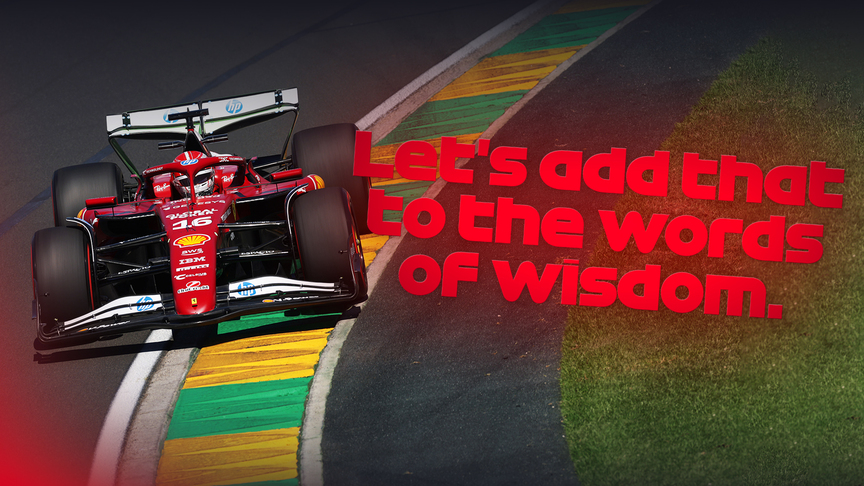
Watch what happens when a driver locks a front tire entering the hairpin at Hockenheim or Canada, runs wide onto the runoff area, and loses two seconds to the car behind. Does he jump on the radio and say: “Sorry team, I hit the brake pedal three meters too late because I missed my braking marker”? Never! Not in a million years!
Instead, you get an immediate, frantic radio broadcast:
“Mate! The brake pedal went completely soft! Check the brake pressure!”
“Whoa! Did someone spill oil on the track at Turn 4?!”
“There was a massive gust of wind that completely blew the rear of the car away!”
It is never the driver. It is always a sudden, unpredictable gust of wind. It is a mysterious drop in tire pressure. It is a rogue plastic bag floating across the track. It is an unexpected shift in cloud cover that dropped track temperatures by 0.2 degrees Celsius!
The telemetry logs reveal the objective truth: brake pressure was identical, wind speed was steady at four knots, and the track temperature didn’t budge. The driver simply missed his mark because he was distracted or braking too hard. But on the radio? It was an act of God that cruelly robbed a generational talent of his rightful apex speed.
The Blue Flag Entitlement: “Get Him Out of My Way!”
Nothing highlights the unbelievable privilege of a Formula 1 driver quite like their interactions with lapped traffic. In almost every other form of motorsport—whether it’s endurance racing at Le Mans, GT3 racing, or American stock car racing—passing slower, lapped cars is considered a core driver skill. You have to read the traffic, pick your line, time your pass, and fight your way through the field without losing momentum.
In Formula 1? The moment a leader gets within two seconds of a slower car running in 16th place, he starts pounding the radio button like a furious customer trying to speak to a restaurant manager: “Blue flags! Blue flags! Come on! Honestly! What is this guy doing?! He’s completely ruining my race! Get him out of the way!”
Imagine driving down a highway in a sports car, coming up behind a truck doing the speed limit, and immediately calling the local police department to demand they force the truck onto the shoulder so you don’t have to tap your cruise control.
That is the level of unadulterated entitlement broadcast across F1 radio every single Sunday. The idea that a driver should have to actually maneuver around a slower car without the FIA intervening with digital warning lights is treated by top drivers as a fundamental violation of their human rights.
Derrick’s Hot Take: Give Us Uncensored, Raw Telemetry Overlay
We need to stop letting drivers dictate the broadcast narrative with their theatrical complaining. If Formula 1 truly wants to elevate the television experience for fans, they should introduce a real-time “Drama vs. Telemetry” graphic right on the screen every single time a driver radio message is played.
When a driver screams “I have no rear grip!” the broadcast should immediately pop up a graphic showing his rear wheel-spin telemetry sitting at a perfect 1.2%.
When a driver cries “My engine is clipping!” show a bar graph displaying 100% full electrical deployment.
When a driver hollers “My tires are totally destroyed!” display a giant, glowing green checkmark with the words: LIE DETECTED – PREPARING TO SET FASTEST LAP.
Expose the bluff in real time! Let the audience laugh at the hilarious disconnect between the driver’s dramatic inner monologue and the staggering, terrifying performance of the machine underneath him.
The Final Lap
At the end of the day, we love Formula 1 drivers precisely because they are insane, hyper-competitive, perfectionist weirdos who view a 0.1-second drop in car performance as an apocalyptic event.
They operate in an extreme pressure cooker where heart rates sit at 170 BPM for two continuous hours, G-forces rip at their neck muscles through every corner, and one millisecond of miscalculation results in a 150 mph crash into a concrete barrier.
So yes, when they get on the radio and whine about a tiny gust of wind, a dead tire that isn’t actually dead, or a lapped car that dared to exist in their proximity, it is utterly ridiculous. It is 10% strategy, 90% pampered theatrical venting.
But as long as they keep setting fastest laps five seconds after declaring their car completely un-driveable, I’ll keep tuning in with my telemetry graphs ready, laughing at every single decibel of pure millionaire drama. Keep complaining, boys. The telemetry never lies.