The Twilight of the Laugh: How Comedy Iconography Ages on Television
Humor is the quickest fading aspect of human culture. An exceptional dramatic performance—such as Marlon Brando in On the Waterfront or Al Pacino in The Godfather—can retain its intense, frightening impact through the ages. You can view those movies seven decades later, and the sorrow impacts with the exact same crushing intensity. Drama depends on universal, eternal human elements: sorrow, aspiration, affection, envy, and death.
Comedy, on the other hand, is a delicate, highly specific creation of its exact time and setting. It depends completely on undermining modern taboos, tapping into the unexpressed social fears of a particular era, and taking advantage of collective cultural symbols that vanish almost immediately after they are created.
Observe what unfolds when an iconic comedy legend—one who dominated the cultural scene two, three, or four decades ago—makes a comeback to television in the later stages of their career.
When a seasoned comedy legend tries to make a late-career resurgence or participates in a career-reflective series, they’re not merely returning in front of a camera. They are entering a dynamic battlefield where the very nuances of human intelligence have developed beneath them. The illumination has changed, the visual pace of TV has sped up to extreme levels, the cultural taboos have entirely reversed, and the audience’s connection with irony has transformed.
This tension is thoughtfully explored with remarkable scholarly attention when contemporary comedic curators such as Judd Apatow create multi-part, retrospective documentary series focusing on legends like Mel Brooks, George Carlin, or Garry Shandling. However, we also observe it unfolding in real time as living legends strive to adjust their later-stage perspectives to contemporary television.
How can a comedy legend grow older on screen without turning into a stale, disconnected artifact? What occurs to comedic timing when a creator transitions from the confident, passionate vigor of youth to a calm, profoundly introspective engagement with their own mortality? Let’s approach comedy with the profound analytical regard it merits and analyze the evolving structural framework of late-career humor.
Part I: The Mechanics of the Aging Joke
To grasp how comedic iconography evolves, we need to uncover the real physical mechanics of how a joke operates within a television script.
At its core, a joke represents a form of cognitive tension. It necessitates a framework that creates an anticipation within the viewer’s mind, quickly followed by a punchline that abruptly shatters that expectation by presenting a shocking, logically sound alternate reality. The gap between the setup and the punchline is where the tension lies. In youthful, energetic comedy, that gap is closed with rapid intensity, powerful vocal variations, and vigorous physical chaos.
As a comedian grows older, their physical abilities significantly transform. They can no longer depend on the primal, energetic force of youth. They cannot dash through a scene, execute outrageous physical antics, or depend solely on uncontrollable energy to elicit laughter from a crowd.
During the intense early stage of a comedian’s career, the rhythm is quick, choppy, highly energetic, and marked by complete lack of breaks. Their humor aims at outside institutions, figures of authority, and rigid cultural standards. The attitude is haughty, cutting, volatile, and focused on conflict. The overarching narrative viewpoint is a bold assertion that life is fundamentally absurd.
As one moves into the late-career icon stage, those physical mechanics entirely reverse. Pacing transitions into brief pauses, strategic silences, and subtle facial changes. The aim of the humor shifts inward to the self, bodily decline, the ridiculousness of inheritance, and the specter of death. The tone softens into a melancholic, observant, weary of the world, and profoundly self-critical demeanor. The narrative perspective subtly recognizes the absurdity of the comic attempting to rationalize the world at all.
Observe how a seasoned expert in their later career adapts to these physical limitations: they exchange speed for weight. They substitute quick punchlines with brief pauses and intentional silence.
While a youthful comedian shouts to occupy the space, a seasoned legend allows a pause to linger in the atmosphere for two painful seconds longer than anticipated. They compel the audience to engage with their physical surroundings. The humor transitions from an aggressive influence to a reflective, highly efficient artistic expression. The arrangement gets streamlined, the joke becomes more subdued, and the comedy hinges not on startling the audience but on exchanging a familiar, weary acknowledgment of the sheer ridiculousness of life.
This change in structure necessitates a deep degree of imaginative self-awareness. The misfortune of numerous unsuccessful late-career returns happens exactly when a veteran star cannot accept this mechanical change. When a 70-year-old comic attempts to act with the same frantic, bro-like, or aggressive vibe they had at twenty-five, the act doesn’t come off as humorous; it feels profoundly uncomfortable, desperate, and tragic. The enchantment unfolds as the icon accepts the inevitable deterioration of their physical tool and focuses the camera on their own aging journey.
Part II: The Mel Brooks Paradigm—Apatow and the Archaeology of Genius
There is no more effective case study for examining how comedy iconography is maintained, examined, and re-assessed on contemporary television than Judd Apatow’s multi-episode documentary retrospectives. Apatow has effectively become the main historian and curator of American comedic brilliance, creating extensive, multi-hour explorations of legends such as Garry Shandling, George Carlin, and Mel Brooks.

What makes these retrospectives essential for critics is their avoidance of shallow, sentimental nostalgia. Apatow examines comedy as a forensic scientist would investigate a rare, unstable chemical compound.
Apatow’s examination of Mel Brooks reveals an important historical fact: Brooks was groundbreaking because he introduced a bold, unapologetic, anarchic Jewish vaudeville perspective into the sterile, mid-century television environment that feared anything too ethnic, too loud, or too ridiculous.
Although the mid-century television standard depended on conventional sitcom themes, clean suburban settings, and cautious, polished comedy, Brooks broke that pattern. He infused anarchic vaudeville and intense genre parody to craft transgressive, boundary-defying farce. He embraced the traditional structural mechanics of slapstick and satirized genre norms with unparalleled, boundary-defying intensity.
Observing Brooks as he contemplates his career in these late-life reflections reveals an intriguing psychological change. The frantic, shouting showman who helmed Blazing Saddles and Young Frankenstein remains, but his connection with his own work has transformed.
He no longer seeks to assert his superiority; he is reflecting on his efforts as a survivor from a bygone golden age. The laughter has shifted from merely inciting chaos in the aisle to preserving the spirits of his partners—Gene Wilder, Carl Reiner, Madeline Kahn—visible on the screen.
Through Apatow’s perspective, television serves as a repository of comedic heritage. Brooks’ anarchic essence clearly influenced the subsequent wave of writers, ranging from SCTV and Monty Python’s surrealism to the self-referential turmoil of sitcoms in the 1990s and 2000s.
By viewing Brooks not merely as a humorous elder, but as a foundational architect who fundamentally transformed the way people create satire, television grants comedy the same high artistic recognition typically reserved for classical music or tragic theater.
Part III: The “Curb” Blueprint—The Art of Aging via Unfiltered Self-Loathing
While Mel Brooks epitomizes the grand theatrical preservation of mid-century farce, Larry David and Curb Your Enthusiasm showcase the definitive model for how a comedic legend can evolve on television over time without compromising any of their acerbic wit.
In the 1990s, Larry David developed Seinfeld with Jerry Seinfeld, establishing a rigid and groundbreaking philosophy for TV comedy based on two well-known principles: no hugging and no learning. He removed the moralistic, sentimental core of the network sitcom and substituted it with a detached, observational fixation on the trivial, petty social missteps of everyday existence.
When David moved to Curb Your Enthusiasm, he took an even bolder step: he permitted himself to age both physically and socially on screen over twenty-four years and twelve seasons, while never compromising his perspective.
Many television celebrities, as they age and accumulate wealth, find themselves in a detrimental snare. They blur their boundaries, crave public love, and aim to convey emotional family morals, resulting in instant artistic demise. Larry David completely sidestepped this pitfall by embracing a radical different approach: as a senior protagonist, he permitted no personal development, intensified his trivial complaints, and upheld an eternal, incisive demeanor.
He utilized his wealth, his baldness, and his growing social isolation to transform himself into the quintessential, raw anti-hero of television comedy.
Larry David on Curb isn’t trying to grasp young people’s perspectives or adjust to contemporary language. He embraces the strict, inflexible stubbornness that accompanies aging.
The humor in late-stage Curb comes entirely from the clash between a society that continuously evolves its social norms, language, and manners, and an elderly man who stubbornly rejects any new limits if they cause him even the slightest inconvenience.
By denying his character even a fleeting instance of sentimental redemption or unmerited personal development, David accomplished something remarkable: he crafted a character in his late seventies who seems far more subversive, modern, and humorous than comedians in their twenties confined to safe, corporate constraints. He demonstrated that the final remedy for aging on screen is complete, unyielding self-hatred.
Part IV: The Friction of Shifting Social Taboos
We cannot talk about late-career comedy without confronting the significant, awkward elephant in the room: the drastic change in societal taboos over generations. When a culture develops, its limits shift. Tropes, jokes, and observational ideas that seemed innovative or widely relatable in 1985 or 1995 may appear distinctly outdated, unkind, or just baffling to viewers in 2026.
This generates a significant artistic dilemma for comedy icons who have dedicated years to developing a distinctive creative style. When a legend reappears on television in their sixties, seventies, or eighties, they encounter a clear decision between two entirely distinct directions.
The initial route is the Reactionary Death-Spiral. In this phase, the icon dedicates their whole late-stage platform to lamenting political correctness, asserting that audiences are overly sensitive, and desperately delivering the identical 1980s shock-humor to a crowd that is becoming more estranged or highly divided. The humor quickly deteriorates into harsh, redundant complaints.
The alternative route is the Evolutionary Pivot. In this mode, the icon understands that evolving taboos pose no danger to comedy, but rather an entirely fresh terrain of human hypocrisy to investigate. They focus their perspective on their own perplexity, their disconnected privilege, and the intriguing clash between their previous outlook and contemporary reality.
Observe how a master such as George Carlin maneuvered through this landscape in his later years. Carlin didn’t lament in his later years about restrictions on his word usage; he merely explored further into the English language.
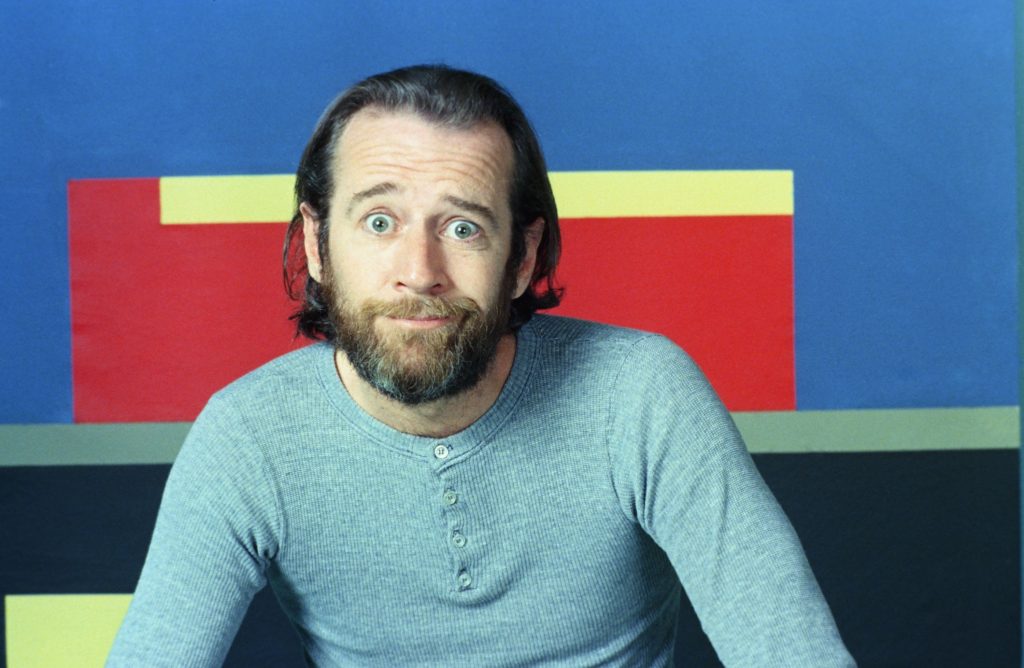
He transformed his television specials from the later part of his career into intense, philosophical, nearly prophetic critiques of corporate greed, American imperialism, and human hypocrisy. He adjusted his timing, tempered his physical movements, and took on the stance of an old, jaded prophet perched on a mountain observing the world ignite beneath. He developed.
On the other hand, witnessing comedy icons spiral into reactionary tendencies is a profoundly disheartening experience for a critic.
When a comedian uses their scarce screen time to lament that audiences no longer find their old routines funny, they violate the essential, unspoken rule of the craft: the audience is never mistaken about what brings them laughter. When a comic faults the audience for not appreciating a joke, they have relinquished their role as a creator.
The most legendary comedic figures recognize that changing social standards aren’t challenges to lament—they are new, unexplored areas ready to be tackled by a quick, flexible intellect.
Part V: Mortality, Legacy, and the Final Punchline
What is it about late-career comedy retrospectives and late-stage TV shows that connect with us so profoundly when done well? This is because comedy, when it’s at its pinnacle, serves as a way to cope with existential challenges. It serves as the main tool for humanity in combating the frightening, uncontrollable truths of aging, bodily decline, and unavoidable mortality.
Observing a comedic legend like Garry Shandling in Apatow’s The Zen Diaries of Garry Shandling, or witnessing an aging icon reflect on a couch in a retrospective series as they discuss their life’s achievements, we aren’t merely experiencing an analysis of humor. We observe a person utilizing humor to cope with the frightening pace at which life fades away.
The existential path of comedy moves along a significant curve. In adolescence, cleverness serves as a tool to conquer the world, establish supremacy, and claim space. In maturity, humor evolves into a reflective tool for examining human imperfections, individual shortcomings, and societal inconsistencies. Ultimately, in later stages of one’s career, humor transforms into an existential armor employed to jest directly at the chilling, frightening visage of death itself.
In youth, humor is a weapon wielded to cut through the world and assert control. In midlife, humor serves as a mirror to reveal human hypocrisy and individual shortcomings. In the concluding chapter of a remarkable career, humor evolves into armor—a courageous, rebellious, and exquisite method of laughing boldly at the harsh reality of death.
When an elderly icon is on a television stage or seated in a documentary chair, examine their eyes closely. You will witness an artist aware that the clapping will eventually cease, that the lights will ultimately fade, and that every joke ever shared is ultimately a fleeting reprieve from the stillness of time.
When they succeed in drawing one final, resounding laugh from an audience—not by relying on cheap gimmicks or sentimental nostalgia, but through sharp, insightful, seasoned truth—it stands as one of the most extraordinary artistic milestones that television can provide. They remind us that although our bodies may deteriorate and our cultural moments may fade, an exceptionally sharp mind can consistently uncover the humor in the gloom.