Is Handheld PC Gaming Actually the Future, or Just a Gimmick for People Who Hate Their Desks?
For decades, PC gaming was defined by structural permanence. To participate in the hobby at its highest level, you implicitly agreed to a specific ritual: you bought or built a heavy, multi-kilogram chassis, bolted it to a rigid flat surface, routed a catastrophic web of cables, and anchored yourself to an ergonomic chair. To be a “PC gamer” was to be desk-bound. It was a lifestyle of static isolation with high performance purchased at the cost of absolute immobility.
Then came the hardware renaissance of the early 2020s, catalyzed by the debut of Valve’s Steam Deck. Suddenly, the sprawling architecture of x86 computing was squeezed into form factors historically reserved for low-power mobile architectures.
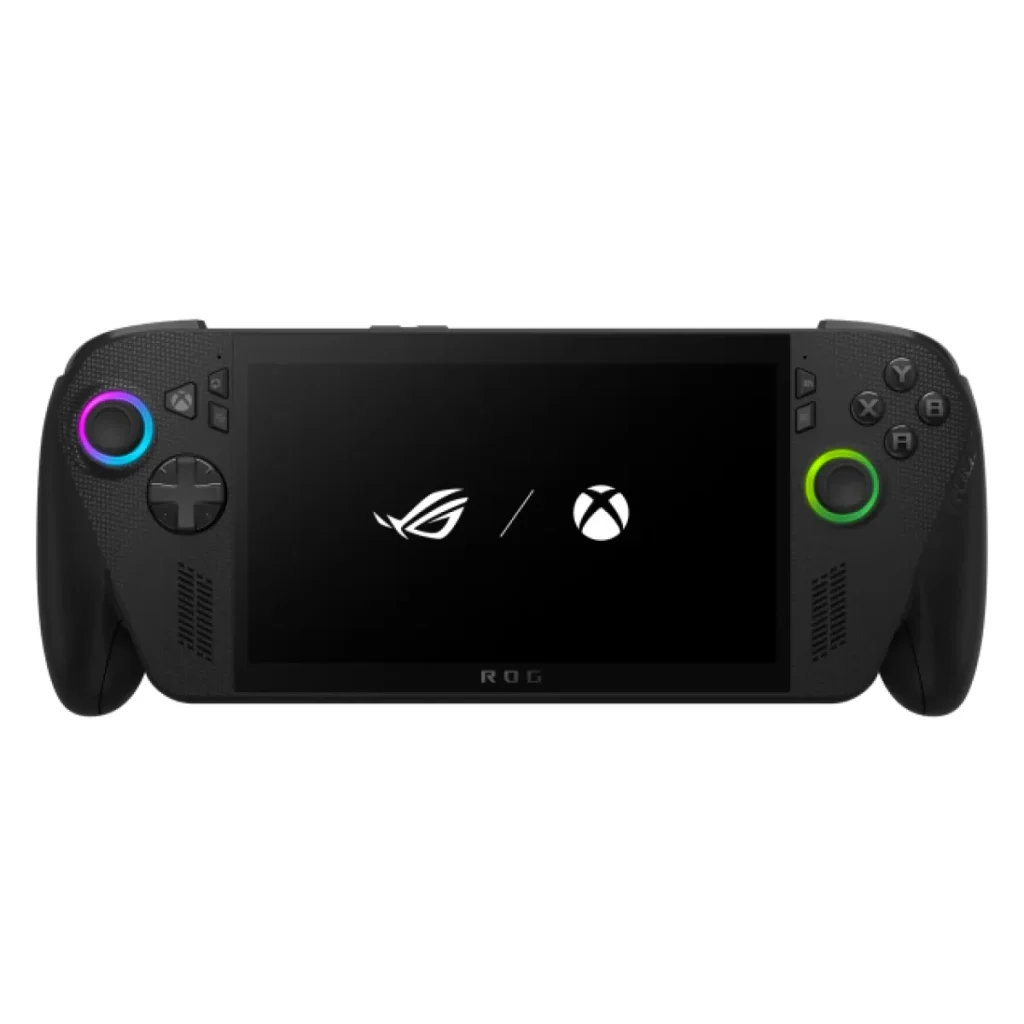
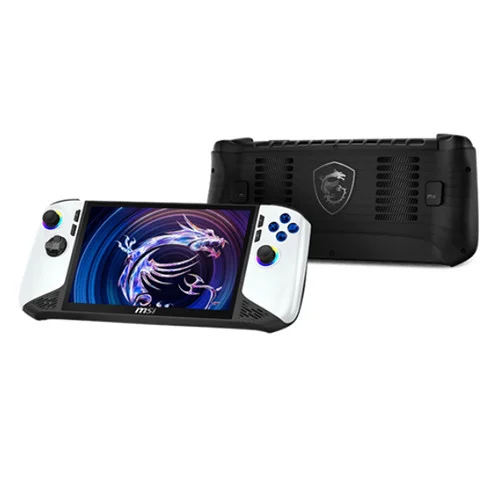
Fast forward to 2026, and the landscape is unrecognizable. We are firmly in the second and third generations of ultra-portable PC silicon. Devices like the ASUS ROG Ally X, the MSI Claw 8 AI+ (featuring Intel’s specialized Lunar Lake architecture), and the resilient Steam Deck OLED populate a multi-billion dollar hardware vertical.
Yet, as market penetration deepens, the philosophical rift within the gaming community has only widened. Critics assert that these devices are nothing more than over-engineered, thermally constrained novelties. Expensive solutions looking for a problem, designed predominantly for tech enthusiasts who harbor an irrational resentment toward sitting at a desk.
Conversely, proponents argue that the handheld PC represents an existential paradigm shift: the liberation of the personal computer from the bedroom office, reshaping how, when, and why we play.
Is the handheld PC an authentic evolution of the platform, or is it a passing architectural gimmick destined to end up in drawers next to forgotten retro portables? To find out, we must dissect the engineering triumphs, the ergonomic compromises, and the profound psychological shift of untethering raw compute power from the wall plug.
The Core Thesis: The Psychology of Desk Fatigue
To understand the sudden, explosive demand for handheld PCs, you have to look beyond the spec sheets and analyze the modern white-collar lifestyle. Over the past decade, the conceptual barrier between work space and play space has entirely collapsed. For millions of people, a desk is no longer a sanctuary for weekend digital adventures; it is the site of an eight-hour daily grind filled with spreadsheets, video calls, and corporate existential dread.
When five o’clock rolls around, the last thing an exhausted worker wants to do is remain seated in the exact same chair, staring at the exact same monitor, gripping a mechanical keyboard. This phenomenon, colloquially termed desk fatigue, has created a profound psychological barrier to gaming. A standard high-end desktop PC requires a commitment: you must sit upright, boot the machine, manage the operating system, and isolate yourself from your household or partner.
The handheld PC attacks this barrier not with raw teraflops, but with frictionless accessibility. It shifts gaming from an event that requires physical relocation to a passive state that adapts to your environment.
- The Couch Companion: It provides the ability to clear a dungeon in Diablo IV while lying horizontally on a couch next to a partner who is watching television.
- The Micro-Session: It creates the capacity to chip away at a massive RPG like Baldur’s Gate 3 in 20-minute increments during a train commute or while waiting in an airport terminal.
- The Evening Ritual: It offers the luxury of taking your entire digital identity to bed, transforming the final hour of the evening into a low-stress, cozy ritual.
The gimmick argument falls apart the moment you realize that these devices are not competing with desktops on performance; they are competing on human utility. They turn dead time into active play windows. For a demographic with shrinking free time and increasing domestic responsibilities, the handheld PC isn’t an attack on the desktop; it is an escape hatch from the office chair.
The Engineering Realities: Power, Thermals, and the Silicon War
To appreciate how we arrived at this point, we have to look under the hood. For years, mobile PC gaming meant massive, 4 kg laptops with power bricks the size of paving stones. Shrinking that capability down into an 800-gram chassis required architectural miracles in efficiency-per-watt.
The silicon landscape is currently defined by an intense arms race between AMD and Intel. While AMD dominated the first wave of devices with the custom Aerith/Sephiroth chips in the Steam Deck and the ubiquitous Ryzen Z1 Extreme, Intel has mounted a massive counter-offensive.
The Generational Shift
Take a look at how the core specifications of the leading handheld profiles stack up today:
| Metric / Feature | Valve Steam Deck OLED | ASUS ROG Ally X | MSI Claw 8 AI+ |
| Processor | Custom AMD APU (6nm) | AMD Ryzen Z1 Extreme | Intel Core Ultra 7 258V |
| Memory | 16GB LPDDR5 | 24GB LPDDR5X | 32GB LPDDR5X |
| Display Panel | 7.4″ HDR OLED (90Hz) | 7″ FHD IPS (120Hz, VRR) | 8″ FHD+ IPS (120Hz, VRR) |
| Battery Capacity | 50 Wh | 80 Wh | 80 Wh |
| Target Power (TDP) | 4W – 15W | 9W – 30W | 15W – 35W |
| Operating System | SteamOS (Linux-based) | Windows 11 Home | Windows 11 Home |
The engineering compromises of these form factors can be summarized by a triad of structural limitations: Thermal Dissipation, Acoustic Tolerance, and Volumetric Energy Density.
The Thermal Tightrope
A desktop GPU has the luxury of massive multi-fan heatsinks that can expel hundreds of watts of heat into an open room. A handheld device must dissipate anywhere from 15 to 35 watts of heat through a copper heat pipe no thicker than a coin, using a fan that sits roughly two inches away from the user’s fingertips.
To prevent the plastic shell from melting or burning the skin, manufacturers use sophisticated capillary structures inside their heat pipes (like ASUS’s Zero Gravity thermal system). These systems ensure that liquid coolant circulates efficiently regardless of whether the user is playing sitting up, lying down, or holding the device upside-down on a couch.
However, physics cannot be cheated. When running at a full 30-watt Turbo mode, these devices push internal silicon temperatures upwards of 80°C. To keep the device from sounding like a hair dryer, the internal firmware must aggressively balance fan speed curves against thermal throttling limits, creating a delicate dance between noise and frame stability.
The Battery Breakthrough
The earliest iterations of x86 handhelds suffered from atrocious battery life, often sputtering out after a measly 60 to 90 minutes of AAA gaming. In response, the industry has pushed physical volume to its absolute limit. The ASUS ROG Ally X and the MSI Claw 8 AI+ have standardized a massive 80 Watt-hour battery pack. To put that into perspective, that is the battery capacity of a high-end 15-inch productivity laptop crammed into a chassis designed to be held in two hands.
Combined with modern architectural leaps—such as the memory-on-package design of Intel’s Lunar Lake chips which cuts down on power-hungry traces across the motherboard—players can finally get a reliable 2 to 3 hours of AAA performance, or up to 6 to 8 hours when playing lighter, pixel-art indie games.
The Software Divide: Linux Cleanliness vs. Windows Chaos
While the hardware configurations have largely converged on highly optimized multi-core APUs (Accelerated Processing Units), the software experience remains deeply fractured. This schism highlights the fundamental tension of the entire product category: Is it a console, or is it a PC?
Valve’s Walled Garden: SteamOS
Valve approached the handheld market with a console-centric philosophy. By developing Proton—a compatibility layer that translates Windows-specific DirectX API instructions into Linux-friendly Vulkan instructions on the fly—Valve managed to turn an open Linux operating system into a slick, unified interface.
The primary triumph of SteamOS is Frictionless State Retention. Thanks to deep architectural control over the kernel, pressing the power button on a Steam Deck instantly suspends the game system state to RAM, drawing negligible power. Pressing it again brings you back into the game in less than two seconds. It is a seamless, console-like experience that masks the underlying PC complexity.
The catch? It’s a curated experience. If a game uses a kernel-level anti-cheat system that doesn’t explicitly support Linux (such as Call of Duty: Warzone, Valorant, or Fortnite), it simply will not run. You are tethered to the boundaries of Valve’s compatibility list.
The Open Wilderness: Windows 11
ASUS, Lenovo, MSI, and Acer took the opposite route by adopting standard Windows 11. The advantage here is absolute, unadulterated software freedom. A Windows handheld is a full-blown personal computer. It natively runs Xbox Game Pass, Epic Games Store, Battle.net, GOG, and any mod, trainer, or third-party emulator you can throw at it. It has no anti-cheat limitations.
However, Windows 11 was fundamentally built for an ecosystem dominated by mice, keyboards, and large desktop panels. Navigating a desktop operating system on a 7-inch touchscreen is an exercise in user-interface frustration. Microscopic drop-down menus, virtual keyboards that refuse to appear automatically, and background Windows updates that hijack system resources are constant reminders of the platform’s desktop heritage.
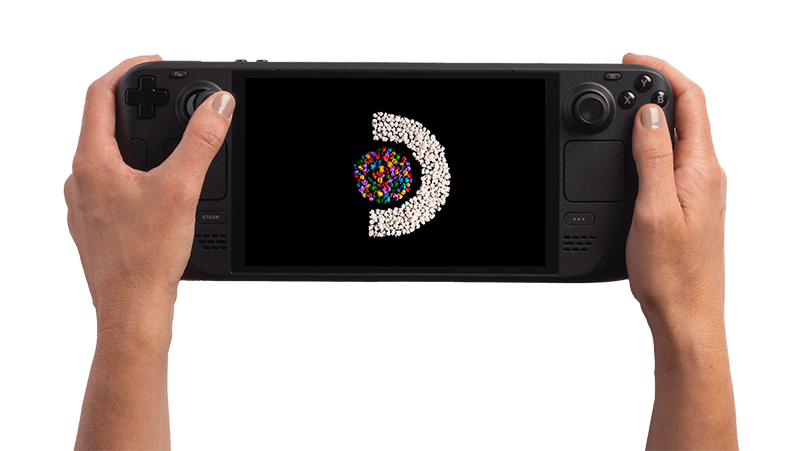
Furthermore, the Windows sleep/hibernation architecture is notoriously unreliable for gaming. Suspending a game often results in crashed audio drivers, disconnected server sessions, or a device that unexpectedly wakes up inside its carrying case, cooking itself to death in a mountain of trapped thermal energy.
To bridge this gap, manufacturers deploy proprietary software overlays like ASUS Armoury Crate SE or MSI Center M. These layers intercept controller inputs and mimic a console interface, but they are ultimately just coats of digital paint over an unyielding, desktop-first foundation.
The Ergonomic Compromise: The Heavy Toll on Wrists and Neck
To call a handheld PC “portable” is technically accurate, but practically misleading. These are not smartphones or pocket-sized retro handhelds that slide effortlessly into a jacket pocket. They are massive, imposing bricks of industrial design.
The weight of a modern high-performance handheld hovers anywhere between 640 grams (ROG Ally X) and nearly 850 grams (Lenovo Legion Go). While this sounds manageable on paper, holding nearly a kilogram of electronics at an angle for multiple hours introduces real physiological strains.
- The Suspended Hold: If you play sitting upright without arm support, your deltoids and forearms are under constant isometric tension. Within an hour, lactic acid builds up, leading to hand fatigue.
- The Couch Hunch: To counteract weight, players often rest the device on their lap or chest. This shifts the physical strain to the cervical spine, causing a profound downward head angle that can result in long-term neck pain, often called “text neck.”
- The Pinky Shelf: Because these devices are wide, users often hook their pinky fingers under the bottom edge of the chassis to stabilize the unit. Over time, the localized weight distribution compresses the ulnar nerve, causing temporary numbness or tingling in the outer fingers.
To combat these realities, ergonomics has become the primary battleground for industrial designers. Manufacturers have moved away from flat, sleek aesthetics to bulky, sculpted palm swells. They use aggressive texturing, drop the angle of the analog sticks to prevent thumb strain, and meticulously calculate the internal center of gravity so the device naturally rotates into the palms rather than pulling away from them.
Yet, the core truth remains: playing a handheld PC is a physical workout compared to holding a 150-gram smartphone. It is an ergonomic compromise where you trade desk-bound back strain for couch-bound wrist fatigue.
Control Innovation: Hall Effect and Layout Dynamics
The spatial relationship between your thumbs, the analog controls, and the chassis mass dictates comfort over extended gaming sessions. Most modern premium handhelds have transitioned to Hall Effect analog sticks and triggers to ensure mechanical longevity.
Unlike traditional potentiometers—which rely on physical carbon tracks rubbing together and inevitably wearing down to cause “stick drift”—Hall Effect sensors use miniature permanent magnets and magnetic field sensors to track input. Because there are no touching parts to wear out, the sticks remain permanently calibrated and immune to mechanical wear.
Furthermore, the integration of rear macro buttons has become a structural necessity. By mapping face-button actions (like jumping or reloading) to buttons on the back of the palm grips, players never have to lift their thumbs off the analog sticks, ensuring they maintain a firm, safe hold on an 800-gram device during chaotic gameplay sequences.
Economic Volatility: The Escalating Cost of Portability
One of the most pressing hurdles facing the handheld PC market is the harsh economic shift of the component landscape. When Valve launched the original Steam Deck, it functioned as a loss-leader; Valve subsidized the hardware costs, knowing they would recoup the margin through software sales on the Steam store ecosystem.
However, ongoing industry challenges have dramatically altered the math for everyone. Global shortages in high-density LPDDR5X memory, paired with rising advanced node packaging costs, have sent manufacturing expenses skyrocketing.
This economic reality hit hard when substantial price shifts hit the market, elevating high-tier setups well past their original baseline tags. When you cross into third-party Windows territory—where brands like ASUS and MSI must turn a profit on the hardware alone without an underlying software store cut—prices regularly land between $700 and $1,000+.
This presents a steep value proposition dilemma. For the price of a premium handheld, a consumer can build a remarkably capable mid-tier desktop computer or buy a top-tier home console paired with a 4K television. The handheld requires the consumer to pay an extreme premium for the miniaturization of components, while accepting that the resulting device will deliver lower framerates, shorter longevity, and zero upgradeability compared to its desktop equivalent.
Case Studies: The Gimmick vs. The Future
To definitively settle whether this category is a gimmick, we must look at how these devices perform across different design philosophies and software ecosystems through distinct, real-world usage models.
The Casual Commuter & The Indie Revolution
Consider a player whose gaming library consists primarily of independent titles like Hades II, Balatro, Dead Cells, or Stardew Valley. For this individual, a modern desktop PC is absurdly over-engineered.
On a device like the Steam Deck OLED, these titles draw a tiny amount of system power—often under 6 to 8 watts total system draw. The fans remain completely silent, the device runs cool to the touch, and the gorgeous infinite contrast of the OLED screen brings stylized 2D artwork to life.
Because indie titles do not demand cutting-edge graphical features, the device doesn’t feel like a compromise. It feels like the definitive way to experience that software. For the indie gamer, the handheld PC is unequivocally the future—it is a digital, high-refresh-rate paperback book for interactive art.
The AAA Enthusiast & The Performance Wall
Now consider a player who wants to experience cutting-edge graphic showcases like Cyberpunk 2077, Alan Wake 2, or next-gen Unreal Engine 5 titles. This is where the gimmick argument gains traction.
To run these titles at an acceptable frame rate, a handheld must turn up its power targets to maximum Turbo profiles (30W+). The battery drains to zero in roughly 75 minutes. The fans spin up to audible levels, creating an acoustic barrier that requires wearing headphones. To keep frame rates near a smooth 60 FPS, the rendering resolution must be dropped to 720p or 1080p, with aggressive temporal upscaling (like AMD FSR or Intel XeSS) filling in the blanks. The resulting image can often look soft, muddy, or plagued by shimmering artifacts.
If you are forced to sit next to a wall outlet because your battery dies in an hour, and your game looks vastly inferior to how it would look on a television or desktop monitor, you must ask yourself: What am I actually saving here? For the pure AAA enthusiast, the handheld format often feels like a compromised novelty that struggles under the weight of its own ambition.
The Chameleon Hybrid (The Docking Ecosystem)
The third use case is the emergence of the Hybrid Desktop System. Many users have stopped buying traditional desktop towers entirely. Instead, they buy a premium handheld like the MSI Claw or the ROG Ally X, alongside an official docking station.
When connected via a single high-bandwidth Thunderbolt 4 or USB4 cable, the handheld transforms into a highly competent daily driver PC. It drives external 4K productivity monitors, runs desktop suites, and connects to keyboards and mice. If the user wants extra gaming performance, they can daisy-chain an external GPU (eGPU) enclosure housing a desktop graphics card, instantly elevating the handheld to an elite-tier gaming battle station.
When it is time to leave the room or go to bed, they simply unplug the cable and slide the device into their bag. This isn’t a gimmick; it is an elegant convergence of data and hardware that makes owning multiple distinct computers feel obsolete.
Gimmick or Future?
When we look closely at the architecture and usage patterns of the current landscape, it becomes obvious that the handheld PC is not a gimmick. A gimmick is defined by transient utility, a feature or product that loses its charm once the novelty wears off (such as 3D televisions, motion-controlled gaming wands, or curved smartphone screens).
The handheld PC has passed the novelty test. It addresses an authentic, deep-seated pain point within the modern tech lifestyle: the profound psychological burnout of desk-bound isolation. It treats gaming not as a destination that requires a dedicated room and a rigid posture, but as a fluid state of entertainment that can follow you across your day.
However, calling it “the future” requires an important caveat: it is not the future of all PC gaming, but rather the creation of a permanent parallel ecosystem. It will never completely replace the raw performance of a dedicated desktop chassis. As long as game developers push the limits of ray tracing, generative AI simulations, and ultra-high resolution textures, there will always be a need for high-wattage desktop towers that can draw 500+ watts from a wall socket.
Instead, the handheld PC has successfully split the platform into two distinct branches:
- The Desktop Environment: Reserved for ultra-high-fidelity, low-latency competitive titles, complex simulation workloads, and absolute graphical supremacy.
- The Ambient Environment: Managed by handhelds, designed for open living spaces, travel, casual play sessions, and the ultimate consumption of independent game libraries.
The people who buy these devices do not hate their desks; they simply love their freedom. By transforming the personal computer into something you can comfortably cradle in bed, pack in a backpack, or seamlessly deploy on a kitchen table, the handheld PC hasn’t diluted the identity of PC gaming, it has finally set it free.
Hexa, out!