The Art of the Silent Scare: How Modern Horror Movies Like Obsession Use Silence Better Than Jump Scares
Imagine you’re sitting in a dimly lit movie theater. On the screen, a character is slowly walking down a long, dimly lit hallway. The camera slowly moves behind them, matching their uncomfortably slow footsteps. What does your brain tell you about?
If you’ve seen any mainstream horror film produced in the last few decades, you already know the script. The soundtrack does ninety percent of the work. It starts to build, the bass strings growing louder, sharper, and more jarring. Tension builds to unbearable levels, your muscles tense, you brace yourself, and then—BOOM!
A cat jumps out of a closet, or a face slams against a window, accompanied by the jarring, artificial blast of wind instruments and electronic bass that shakes your seat. You jump. Your heart races. But are you really scared?
In my opinion, the answer is almost always no. You don’t experience real terror; you only experience a basic biological reflex. If someone in real life sneaked up behind you and shoved a paper bag to your ear, you’d jump. That’s an involuntary neurological survival mechanism, not an emotional response to a brilliantly staged work of art.
Sudden jump scares in modern horror films have become the laziest shortcut in Hollywood. It’s the equivalent of a comedian stepping onto the stage and tickling the audience to force them to laugh.
Fortunately, a silent revolution is underway in the horror genre. A wave of visionary filmmakers is completely abandoning the noisy gimmicks of the past. Instead, they are employing a far more terrifying, deeply psychological, and utterly unsettling tool: absolute, suffocating silence.
From independent masterpieces like Curry Baker’s Obsession to blockbusters like A Quiet Place, modern horror has rediscovered the art of silent terror. By eliminating safety sounds and loud noises, these films demonstrate that what we don’t hear is far more terrifying than any monster a studio might create.
The Auditory Deprivation Trap
To understand why silence is such a powerful weapon in horror films, we need to consider the psychology of human hearing. Hearing is our primary passive defense mechanism. When you sleep or walk through a dark parking lot at night, your eyes can only see what’s directly in front of you.
However, your ears are constantly scanning a 360-degree range around your body. They search for anomalies, track threats, and measure distances in the darkness.
When a horror film uses traditional background music, it actually gives the audience a strange sense of comfort. Even if the music is frightening, jarring, or aggressive, it still fills the room. It creates a barrier between you and the empty space. It acts as an emotional map, telling your brain exactly how you feel, when to prepare mentally, and when the danger has finally passed.

When a director completely cuts out the sound, that defense mechanism is instantly removed. You are suddenly thrust into a state of complete hearing loss.
Without background music to guide you, your brain panics. Your nervous system overreacts. Every slightest sound in the movie theater or your living room—the rustling of a bag of popcorn, the creaking of floorboards, your own breathing—is amplified a thousandfold.
The film forces you to actively listen to the darkness. By removing the music, the director empowers your imagination to directly control the terror. And as anyone who has ever stayed up all night in a dark room knows, your imagination is a more brutal torturer than any Hollywood screenwriter.
The Subversive Brilliance of Curry Baker’s Obsession
Nowhere is the mastery of silence more evident than in Curry Baker’s acclaimed psychological thriller, *Obsession*. Written, directed, and starring Baker, the film represents the pinnacle of ingenuity in modern low-budget independent filmmaking.
Built around a mysterious matchbox that can grant a single wish, but at a terrifying psychological cost, *Obsession* bypasses conventional cinematic techniques to deliver a cinematic experience akin to a prolonged panic attack.
What makes Curry Baker’s direction so brilliant is his complete refusal to use sound cues to rescue the audience. The film features long, agonizing silences where the background music completely disappears.
There is one segment in the film where a character is forced to confront the horrifying, inexplicable transformations occurring in their home. Instead of using the jarring screech of an orchestra to herald the horror, Baker keeps the camera fixed in wide, static frames. The silence is so heavy it feels tangible.
Every movement of the protagonist’s hand, every slow step on the carpet, and every gasp is captured with the utmost detail. Because the scene is enveloped in absolute silence, the smallest sounds around the house become incredibly terrifying. The distant creak of floorboards or the slight click of a doorknob not only startles you, but also makes your guts churn.
Baker understands that the climax of true horror isn’t the sudden blow, but the long, agonizing moment of waiting for the worst to happen. By stripping away the safety net of traditional background music, Obsession forces you to sit in the silent, desperate reality of the characters.
The Visual Architecture of Quiet Horror
When you remove sound from a horror scene, you completely change how the audience looks at the screen. In a noisy film with many jump scares, your eyes can comfortably focus on the center of the frame, knowing that sound cues will startle you whenever something significant happens.
In a silent horror film, your eyes become desperate. They begin searching for clues. Master directors of the art of silent horror use very specific visual compositions to maximize this psychological desperation. They rely heavily on wide shots with deep focus, keeping both the foreground and background extremely sharp. They leave large empty spaces and absolute shadows around the edges of the screen.
When a scene is completely silent, and the camera is fixed on a wide shot, the viewer’s eyes begin to constantly dart across the frame. You look at the dark hallway behind the character. You examine the cracked door to the left. You observe the shadow under the bed. You become highly alert, convinced that the slightest movement in the darkness will reveal a threat.
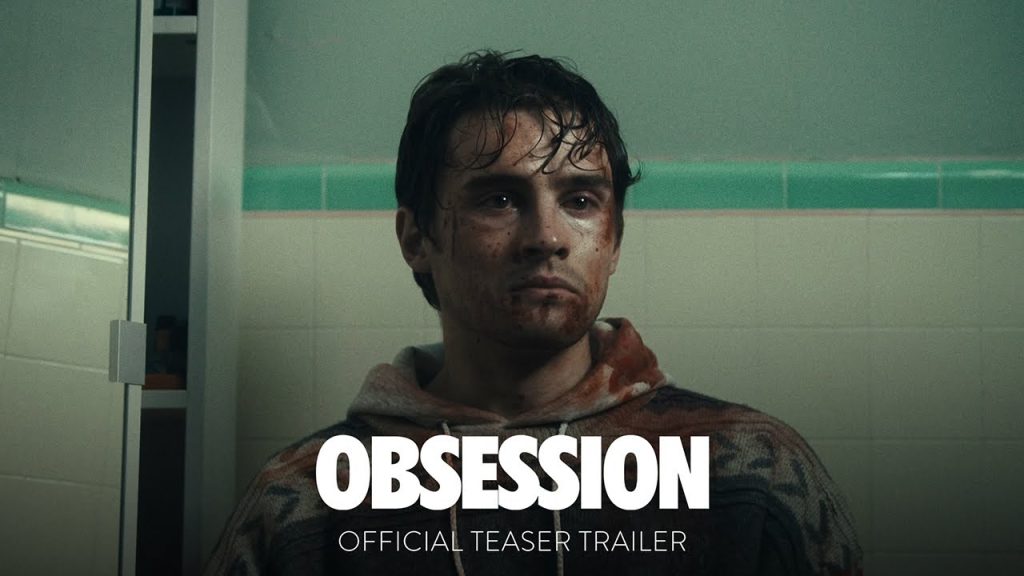
Curry Baker used this visual tension brilliantly in Obsession. Because the budget didn’t allow for huge, expensive CGI monsters, he relied on position, lighting, and framing. A shadow moving slowly in the quiet corner of a room is far more terrifying without the jarring music prompting you to look. You have to discover the horror for yourself, which makes the fear deeper and more real.
The Absolute Failure of the Modern Sound Mix
To truly appreciate the brilliance of these independent, dialogue-free horror films, we must compare them to the abysmal state of standard Hollywood sound systems today.
If you’ve recently been to a movie theater to see a typical horror film from a major studio, you may have noticed that the experience is quite jarring to the ears. The dynamic range in modern blockbusters has been completely distorted.
Quiet dialogue scenes are so softly soundproofed that you barely hear them, forcing you to strain your ears to follow the plot. Then, action scenes and jump scares are pushed to ridiculously high, ear-splitting volumes, distorting the theater’s speakers.
This isn’t clever sound design; it’s a cheap, aggressive assault on the audience’s senses. It stems from a profound lack of confidence. Film studio executives fear that if a movie is silent for more than thirty seconds, the audience will get bored, pull out their smartphones, and check social media notifications. They see the silence as a void that needs to be forcefully filled with noise, jump scares, and background music.
But this constant wall of sound completely negates the impact of the film. If everything is noisy, then nothing is noisy. If the audience has to endure fifteen fake jump scares in the first forty-five minutes of a movie, their nervous system will eventually become completely numb. Adrenaline reserves are depleted, tension dissipates, and the film becomes a tedious, exhausting experience, more like a chore than an entertainment.
The Legacy of Creative Restraint
Filmmakers gravitating toward silence are tapping into a mythical tradition of creative restraint dating back to the dawn of cinema.
Before the advent of digital editing software and high-quality multi-channel sound systems, directors relied on atmosphere, shadows, and hints to frighten audiences. Think of Val Lewton’s legendary work from the 1940s, particularly *The Cat People*.
Lewton invented the concept of the feigned jump scare – often called the “Bus” – where the sudden screech of air brakes breaks a moment of tension. But Lewton used the technique sparingly, surrounding it with long, atmospheric, absolutely silent walks through foggy city streets.
Think of Ridley Scott’s 1979 film *Alien*. The final confrontation between Ripley and the Xenomorph inside the escape shuttle unfolds almost entirely without background music. You only hear the mechanical hum of the ship’s life support system, Sigourney Weaver’s heavy, labored gasps, and the dripping mucus from the creature’s jaws.
That scene remains a perfect masterpiece of the science fiction horror genre because it feels so real. It lacks the grandeur of a Hollywood orchestra, making you feel as though you’re trapped inside that small, suffocating newsbox alongside her.
Curry Baker’s Obsession belongs to this restrained genre. In an era where independent horror films sometimes get bogged down in trying to emulate the polish of big-budget studios, Baker has embraced his budget constraints and turned silence into his most valuable sonic asset.
Silence is the Ultimate Monster
The human brain will always be fundamentally terrified of the unknown. A monster that is fully revealed in bright light, accompanied by a booming musical score, is no longer a mystery. It is a known variable. It has a shape, a size, and a definition. Once we can see and hear it clearly, it loses its power over us.
Silence, however, keeps the mystery alive. Silence is an empty canvas upon which we project our own deepest, most primal anxieties. It represents the unknown, the unseen, and the unspoken.
When a movie like Obsession dares to go completely quiet, it is showing an incredible level of respect for the intelligence and the imagination of its audience. It understands that the human mind is fully capable of terrifying itself if it is just given the space to do so.
The era of the cheap, noisy, obnoxious jump scare needs to come to an end. It has degraded the genre, numbed the audience, and turned an art form into a theme-park ride. It is time for Hollywood to realize that true terror does not scream at the top of its lungs. True terror creeps into the room on tiptoe, sits down right next to you in the dark, and stays absolutely, perfectly still.