How God of War: Laufey Shoves Kratos Aside to Fix the Franchise’s Biggest Narrative Blindspot
For nearly twenty-one years, the God of War franchise has been structurally tethered to a single, monolithic entity: Kratos. From his early days as a rage-fueled, ash-covered Spartan general butchering the Greek pantheon to his older, deeply exhausted incarnation guiding his son through the frozen realms of Norse mythology, the series was Kratos. His internal trauma, his booming baritone voice, and his desperate battle for redemption dictated every single mechanical and narrative pulse of Santa Monica Studio’s flagship IP.
But at Sony’s recent State of Play, the developers did something that previously seemed entirely unthinkable. They unveiled God of War: Laufey, a standalone premium spin-off that completely removes the Ghost of Sparta from the equation.
Instead of stepping back into the heavily armored boots of Kratos, players are thrust into the role of Laufey the Just, better known as Faye, the late Guardian of the Jötnar, rebel leader, and Kratos’s second wife. What makes Laufey such a staggering, high-stakes creative gamble is its narrative framing.
This is not a predictable prequel about Faye’s early days in Midgard. Instead, it is a “side-quel” that begins the exact moment Faye dies prior to the 2018 reboot. Awakening unexpectedly in the “Everywhen”, a volatile afterlife realm where dead gods from entirely different global pantheons vie for power, Faye discovers that the complex, prophetic plans she left behind to protect her husband and son are actively being sabotaged.
By centering an entire blockbuster around a protagonist who spent the last two mainline entries as nothing more than wrapped ashes and a narrative ghost, Santa Monica Studio isn’t just taking a structural risk. They are directly confronting the Norse duology’s biggest narrative blind spot: the total deification and lack of agency given to the woman who secretly orchestrated the entire mythos.
Dismantling the Myth of the Perfect Mother
To understand why God of War: Laufey is such a necessary piece of narrative surgery, one must first look at how the Norse duology treated Faye’s memory. Throughout both God of War (2018) and God of War Ragnarök, Faye existed exclusively through a lens of absolute, flawless reverence.
To Kratos, she was the ultimate sanctuary—the gentle, infinitely wise woman who taught him how to be a compassionate father and proved that he was capable of being more than a mindless monster. To Atreus, she was the idealized, deeply missed maternal figure who represented safety, warmth, and the proud legacy of the Giants.
While this made for a beautifully poignant emotional backbone for Kratos’s redemption arc, it inadvertently committed a common storytelling sin: it hollowed Faye out as an independent character. She was elevated to a saintly, narrative macguffin whose entire existence was defined solely by how her death and her prophecies impacted the two male protagonists. She wasn’t a person; she was a perfect, pristine plot device.
God of War: Laufey systematically dismantles this idealized pedestal. By dropping the player directly into her consciousness in the afterlife, the game reveals the immense, crushing psychological burden she carried. We are introduced to a Faye who is fundamentally human, deeply anxious, and wracked with a profound sense of maternal guilt.
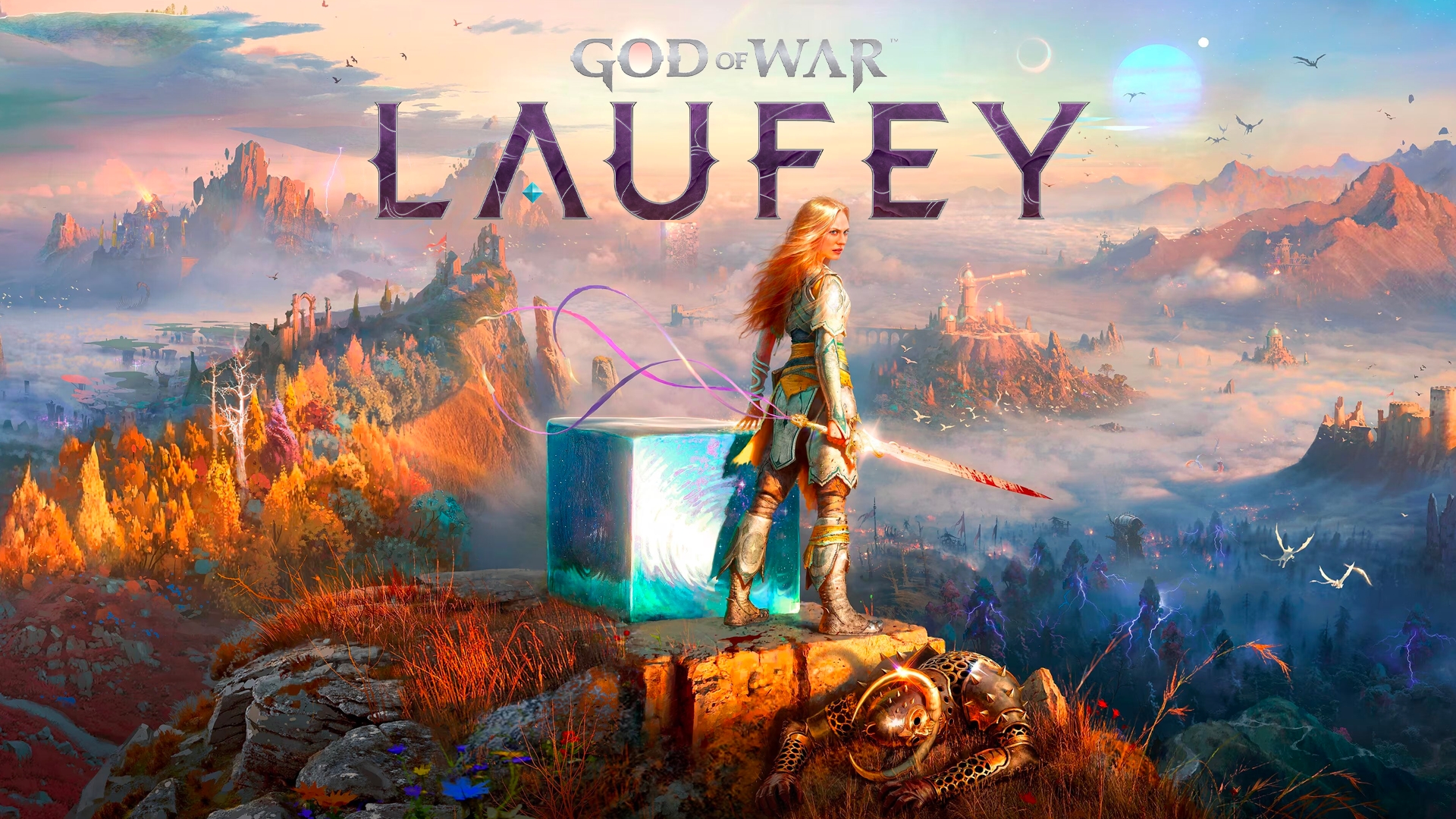
She isn’t an omniscient seer casually writing prophecies on a cave wall; she is a desperate strategist who had to actively manipulate the timelines, keep devastating secrets from her husband, and make cold, calculating military decisions that she knew would cause immense pain to her family.
By forcing the audience to experience her internal doubts, her mistakes, and her distinct personal relationships with the gods she left behind, the game fixes the duology’s blind spot—transforming a flat, holy memory into a living, breathing, and fascinatingly flawed warrior.
Translating Brutal Agility into Underground Resistance
The second major hurdle facing Santa Monica Studio is mechanical translation. The God of War franchise has built its global reputation on a specific visual language of violence: raw, heavy, earth-shattering impact. Kratos’s combat identity is defined by mass, momentum, and brutal, defensive stabilization. When he swings the Leviathan Axe or slams the Blades of Chaos into the dirt, the player feels the sheer, crushing weight of a demi-god.
Faye, as a Frost Giant warrior who famously went toe-to-toe with Thor in a battle that flattened landscapes, cannot simply feel like a skin-swap of Kratos. Her combat mechanics have been completely re-engineered from the ground up to reflect her identity as an underground rebel leader and an agile guardian.
Faye wields the Leviathan Axe before it was ever gifted to Kratos, but her relationship with the weapon is entirely distinct. Her combat loop relies heavily on blinding speed, precise crowd control, and kinetic fluidity.
Instead of Kratos’s forward-facing, immovable shield deflections, Faye’s defense is built entirely around evasive, dynamic counters, structural subversion, and high-mobility positioning. Her animations are fiercely aggressive but elegantly precise, allowing players to weave between enemy attacks, chain multi-directional frost bursts, and manipulate the terrain of the Everywhen with spatial magical arrays.
The game masterfully translates the franchise’s signature visceral brutality into a pacing style that feels light, breathless, and incredibly sharp—proving that a character can be jaw-droppingly deadly without relying on the slow, hulking mass of the traditional Spartan archetype.
The Architecture of the Everywhen: A Multi-Pantheon War Zone
By placing the game within the “Everywhen”, the chaotic afterlife corridor of fallen deities, the narrative directors have unlocked a brilliant, lore-deepening space that addresses one of the biggest hanging threads of Ragnarök: the green, mysterious Mask of Creation that Odin spent his entire life hunting.
The Everywhen is not a peaceful, quiet meadow for the dead; it is a lawless, multi-pantheon war zone overflowing with ancient, dangerous magic. Because the realm acts as a cosmic waiting room where gods from different cultural mythologies collide upon their physical deaths, the visual architecture of the game is a stunning, fragmented mosaic of global design.
As Faye navigates this fractured landscape, she isn’t just fighting standard Norse monsters. She is actively navigating political factions, ancient grudges, and ruthless deities from Chinese, Mayan, and Egyptian mythologies who are all vying to control the cosmic gateways to reality.
This setting allows the developers to indulge in a massive scope of world-building without needing to officially launch a brand-new regional trilogy. It creates an incredible sense of scale and psychological dread; every environment feels deeply alien, ancient, and dangerous. The world feels entirely untamed, emphasizing Faye’s status as a lone, isolated resistance fighter struggling to maintain the integrity of her family’s destiny against a literal ocean of cosmic opposition.
The Ultimate Protagonist Hand-Off
There is an immense corporate and creative anxiety that occurs whenever a studio decides to bench a legendary, multi-decade mascot to let someone else shine. Historically, these hand-offs are met with extreme skepticism from core player bases who fear that the identity of their favorite franchise is being watered down or permanently compromised.
But God of War: Laufey succeeds because it treats this hand-off not as a superficial corporate mandate, but as a vital, deeply respectful expansion of the mythos. The game doesn’t erase Kratos’s legacy; it actively retroactively enriches it. By showing the staggering level of sacrifice, combat prowess, and emotional labor Faye endured behind the scenes to secure the future of her family, her character stops being a passive shadow cast over Kratos’s shoulder.
When players eventually return to the main series after completing Laufey, their perception of the entire Norse duology will be permanently, beautifully transformed. They will no longer just see a story about a father and a son surviving the apocalypse; they will see the definitive, hard-fought triumph of a fierce, brilliant Giant who fought through hell and the afterlife to ensure her loved ones could live in peace.